Engineering Roadmap Planning: Achieve Strategic Execution at Scale
Create effective engineering roadmaps. Learn how to balance technical debt, feature development, and strategic initiatives in your planning.
Posted by
 Joseph Kaplan
Related reading
CTO Architecture Ownership at Early-Stage Startups: Execution Models & Leadership Clarity
At this stage, architecture is about speed and flexibility, not long-term perfection - sometimes you take on technical debt, on purpose, to move faster.
CTO Architecture Ownership at Series A Companies: Real Stage-Specific Accountability
Success: engineering scales without CTO bottlenecks, and technical strategy is clear to investors.
CTO Architecture Ownership at Series B Companies: Leadership & Equity Realities
The CTO role now means balancing technical leadership with business architecture - turning company goals into real technical plans that meet both product needs and investor deadlines.
Defining Engineering Roadmap Planning
Engineering roadmap planning establishes technical direction by mapping development priorities to business goals across defined timeframes. It bridges strategic intent with execution capacity while maintaining flexibility for emerging constraints.
Purpose and Scope
An engineering roadmap outlines high-level plans and objectives for product development work. It differs from project plans by focusing on strategic themes rather than granular task lists. The scope spans major technical initiatives, platform investments, and architectural decisions that shape product capabilities over quarters or years.
Engineering teams use roadmaps to evaluate architecture trade-offs before committing resources. A roadmap might prioritize migrating to microservices, adopting specific observability tools, or integrating AI capabilities into core systems. These decisions carry material cost implications and performance profiles that extend beyond single sprints.
The roadmap also serves as a forcing function for technical-debt prioritization. Teams must explicitly choose between feature velocity and infrastructure stability. Leading organizations treat this as a capacity-allocation problem, often dedicating 20-30% of engineering bandwidth to platform work that doesn't directly ship user-facing features but enables sustained delivery speed.
Key Stakeholders Involved
Engineering leadership owns roadmap creation and maintenance, translating company strategy into technical initiatives. They assess tool-chain options, benchmark performance requirements, and determine staffing models that support planned work.
Product managers contribute market insights and user needs that influence technical priorities. They help engineering teams understand which capabilities create competitive advantage versus commodity features that don't warrant custom development.
The engineering department provides execution estimates and surfaces technical constraints. Individual contributors identify dependencies, flag architectural risks, and propose alternative approaches that leadership might not see from their vantage point.
Executive stakeholders review roadmaps to verify alignment with business objectives and resource availability. They make final calls on competing priorities when engineering capacity can't accommodate all proposed initiatives within desired timeframes.
Types of Engineering Roadmaps
| Roadmap Type | Primary Focus | Typical Timeline |
|---|---|---|
| Product Development | Feature delivery and user-facing capabilities | 3-12 months |
| Platform/Infrastructure | System reliability, scalability, and developer experience | 6-18 months |
| Technology Adoption | Tool migration, framework upgrades, and AI integration | 12-24 months |
Product development roadmaps track features that directly impact customers. They align tightly with product strategy and release cycles, requiring coordination between engineering teams and go-to-market functions.
Platform roadmaps address technical foundations like build systems, deployment pipelines, and observability infrastructure. These initiatives rarely have visible customer impact but determine whether engineering velocity accelerates or degrades over time. High-performing teams instrument their platforms extensively, measuring build times, deployment frequency, and incident recovery speeds to justify continued investment.
Technology adoption roadmaps guide transitions to new languages, frameworks, or architectural patterns. They require careful sequencing - migrating to Kubernetes before containerizing applications creates unnecessary complexity. Organizations evaluate these decisions by modeling total cost of ownership, not just licensing fees, accounting for training time, integration effort, and operational overhead.
Strategic Alignment and Goal Setting
Wake Up Your Tech Knowledge
Join 40,000 others and get Codeinated in 5 minutes. The free weekly email that wakes up your tech knowledge. Five minutes. Every week. No drowsiness. Five minutes. No drowsiness.
Engineering roadmaps gain traction when they directly serve measurable business outcomes and translate high-level company priorities into concrete technical milestones. Teams that establish clear connections between product strategy and engineering execution reduce wasted cycles and ship features that move core metrics.
Business Objectives Integration
Aligning engineering roadmaps with business objectives requires engineering leaders to map every major initiative to specific company-level goals. This means understanding which revenue targets, user growth metrics, or market expansion plans depend on technical delivery.
Strong teams start by identifying the top three to five business objectives for the quarter or year. They then audit their planned engineering work to ensure each significant project ladders up to at least one objective. If an initiative doesn't connect to a business goal, it either gets deprioritized or leadership articulates a new strategic rationale.
The most effective engineering organizations use OKRs to create this linkage. They define objectives that reflect business outcomes rather than technical outputs. For example, instead of "migrate 80% of services to new infrastructure," the objective becomes "reduce infrastructure costs by 30% while maintaining 99.9% uptime." This framing keeps the focus on business impact.
Top engineering teams also evaluate architectural decisions through this lens. When choosing between microservices and a monolith, they consider not just technical elegance but time-to-market requirements and team velocity constraints that directly affect the strategic plan.
SMART Goal Framework
SMART goals provide structure for setting clear and measurable goals that engineering teams can actually track and achieve. Each goal must be Specific, Measurable, Achievable, Relevant, and Time-bound.
Specific goals eliminate ambiguity. "Improve API performance" becomes "reduce p95 latency for user profile endpoints from 400ms to 150ms." This precision allows teams to know exactly what success looks like and prevents scope creep during execution.
Measurable criteria let teams track progress objectively. Engineering leaders define baseline metrics, target values, and measurement methods before work begins. They instrument systems to capture data automatically rather than relying on subjective assessments.
Achievable means the goal stretches the team without breaking it. Engineering managers assess current capacity, skill gaps, and dependencies. They factor in on-call rotations, tech debt work, and inevitable production incidents that consume 20-30% of engineering time.
Relevant goals tie back to business objectives and themes in the roadmap. Time-bound parameters create urgency and enable resource planning across sprints.
Themes and Epics Breakdown
Themes and epics structure roadmaps by grouping related work into coherent initiatives that span multiple sprints. Themes represent broad strategic focus areas like "platform scalability" or "payment system modernization." Epics break themes into specific bodies of work that teams can estimate and schedule.
A theme might be "real-time data infrastructure" while epics under it include "implement event streaming platform," "migrate batch jobs to stream processing," and "build monitoring dashboards for data pipelines." This hierarchy helps stakeholders understand how individual engineering efforts connect to larger strategic bets.
Effective epic definition requires engineering leaders to balance granularity with flexibility. Epics detailed enough that teams can estimate effort and identify dependencies, but not so rigid that they prevent teams from adjusting implementation as they learn. Most epics represent 4-12 weeks of work for a single team.
When breaking down themes, experienced engineering leaders identify milestones that deliver incremental business value. Rather than building an entire platform before any customer benefit, they sequence epics to ship usable functionality every few sprints. This approach reduces risk and generates feedback that improves subsequent work.
Roadmap Structure and Visualization
The structure of an engineering roadmap determines how easily teams can parse strategic intent from execution details, and visualization choices directly affect stakeholder alignment and sprint velocity.
Selecting a Roadmap Template
Engineering teams should evaluate templates based on execution model and audience. An engineering roadmap template typically organizes work by swim lanes representing teams or functional areas, with time-boxed sprints across the horizontal axis. Teams running continuous deployment cycles favor templates that surface epics and themes over granular tasks.
Gantt charts work well for waterfall-adjacent projects with sequential dependencies, showing task duration and overlap across fixed timelines. They communicate milestone sequencing to finance and executive stakeholders who think in quarters and fiscal years.
Kanban boards suit teams prioritizing flow efficiency over fixed deadlines. They visualize work-in-progress limits and bottleneck identification but lack the temporal clarity needed for cross-functional planning.
High-performing organizations often layer multiple views. They maintain a strategic roadmap for leadership using swimlane templates, a Gantt chart for program management tracking dependencies, and Kanban boards for day-to-day sprint execution. This multi-view approach prevents the common failure mode where engineering builds the right features at the wrong time because roadmap structure didn't surface resource constraints early enough.
Visual Representation Methods
Visual clarity separates roadmaps that drive decisions from those that collect dust. Effective product roadmap visualization uses color coding to distinguish between infrastructure work, feature development, and technical debt reduction. This allows executives to quickly assess investment balance without parsing spreadsheet rows.
Timeline-based views show initiative duration and sequence. Swimlane layouts organize by team or product area. Matrix formats map features against customer segments or strategic objectives. Each format answers different questions.
Tables complement visual roadmaps by listing key metrics: effort estimates, dependency counts, and risk ratings. They provide the quantitative backing that visual elements suggest but cannot fully convey.
Top engineering teams avoid the trap of over-decorating roadmaps with excessive detail. They limit each initiative to a title, brief outcome statement, and owner. Supporting documentation lives in linked project management tools, not cluttering the roadmap itself.
Quarterly Planning and Themes
Quarterly boundaries align engineering work with business planning cycles and create natural checkpoints for reprioritization. Engineering leaders group related initiatives into themes that span multiple sprints, preventing the fragmentation that occurs when teams chase disconnected tasks.
A theme might be "API performance optimization" encompassing database indexing, caching layer implementation, and query refactoring across a 12-week period. This thematic structure helps engineers understand how their daily work connects to measurable business outcomes like reduced infrastructure costs or improved customer retention.
Teams structure each quarter around two to four major themes maximum. More themes dilute focus and create context-switching overhead that tanks productivity. Each theme gets a dedicated swim lane on the roadmap with clear success metrics visible to all contributors.
The quarterly cadence creates forcing functions for architectural decisions that might otherwise linger. When leadership knows Q3 focuses on multi-region deployment, infrastructure choices get made in Q2 rather than being perpetually deferred.
Planning Processes and Task Prioritization
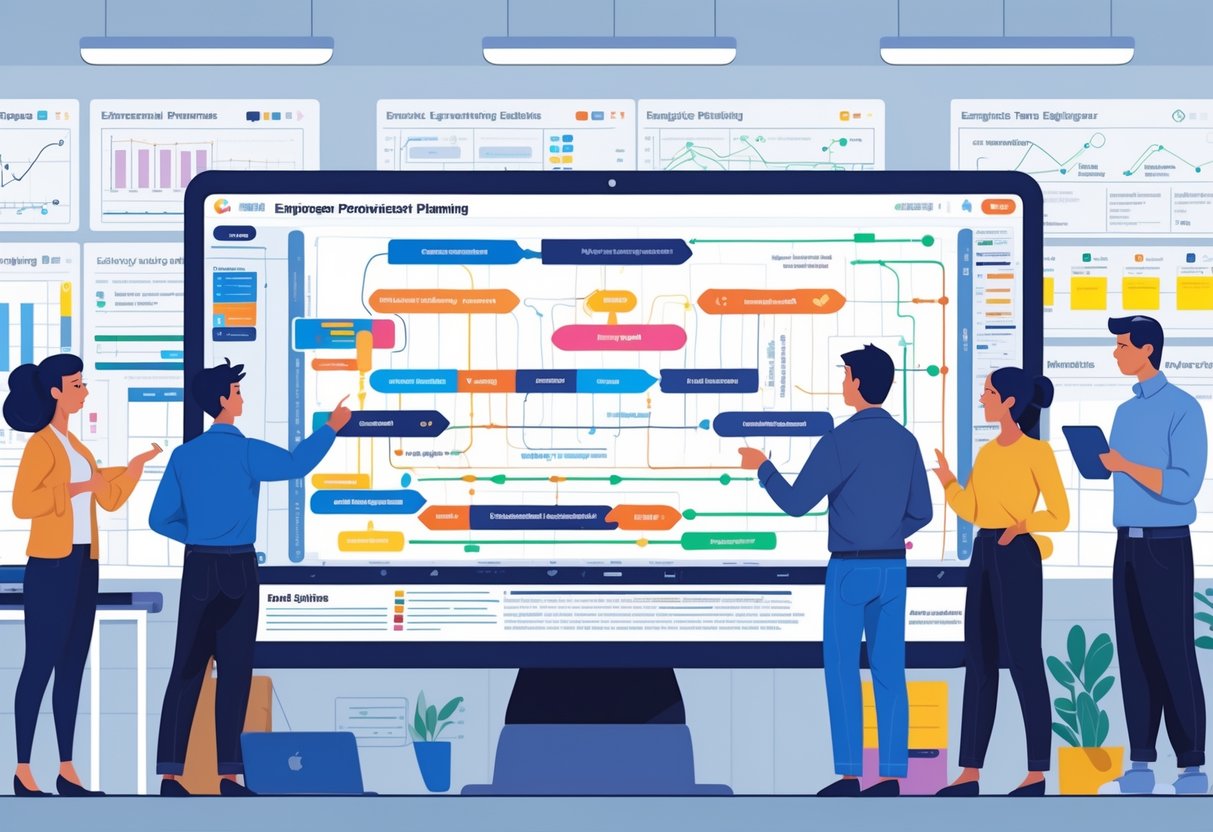
Engineering teams execute faster when they convert strategic intent into ranked work items using systematic evaluation methods. The difference between teams that ship predictably and those that stall often comes down to how they assess task value against available capacity and how they structure work into executable units.
Prioritize Tasks Effectively
Engineering managers must evaluate each task against business impact and resource consumption before committing team capacity. High-performing teams assess tasks across multiple dimensions: customer-facing value, technical debt reduction, system reliability improvements, and architectural positioning for future capabilities.
The prioritization process requires structured evaluation rather than intuition alone. Teams that rank based solely on stakeholder pressure accumulate technical debt that compounds over quarters. Instead, effective prioritization compares each item against others in the backlog using consistent criteria.
A practical approach involves scoring tasks on impact and effort, then placing them into priority tiers. Tasks delivering maximum value with minimal engineering hours get immediate attention. High-effort, high-value initiatives require milestone planning and phased delivery. Low-value work regardless of effort moves to a deferred list that gets reassessed quarterly.
Elite engineering organizations build internal scoring models that weight factors specific to their domain. A fintech platform might heavily weight compliance requirements and data integrity. A consumer app team might prioritize latency reduction and user engagement metrics. These custom frameworks prevent misaligned work from consuming sprint capacity.
Wake Up Your Tech Knowledge
Join 40,000 others and get Codeinated in 5 minutes. The free weekly email that wakes up your tech knowledge. Five minutes. Every week. No drowsiness. Five minutes. No drowsiness.
Frameworks for Decision-Making
Structured prioritization frameworks eliminate subjective debates about what teams should build next. The MoSCoW method divides features into Must-have, Should-have, and Could-have categories for fixed-scope releases. This forces product and engineering leadership to identify true release blockers versus nice-to-have features.
The Value-Effort Matrix maps tasks across four quadrants based on implementation cost and business return. Quick wins in the low-effort, high-value quadrant become immediate priorities. High-effort, low-value items get eliminated entirely unless strategic considerations override the economics.
For incident response and production issues, severity-frequency matrices provide objective rules. A P0 incident affecting 10% of users with S0 severity demands immediate escalation. An S2 issue reproducing in 5% of edge cases enters the regular backlog. These predefined rules prevent emotional reactions from distorting engineering focus.
Stack ranking forces absolute prioritization when teams face hard tradeoffs under deadline pressure. Every task receives a unique rank with no ties allowed. This method works particularly well during quarterly planning when engineering capacity is fixed and feature requests exceed availability.
The patterns that separate effective teams from struggling ones involve continuous framework refinement. Codeinate examines how leading engineering organizations adapt these models to their specific constraints and how they balance immediate execution pressure against long-term architectural positioning.
Task Breakdown Strategies
Teams break roadmap initiatives into executable work units that fit within sprint boundaries while maintaining architectural coherence. The decomposition process determines whether milestones ship on schedule or slip repeatedly.
Effective breakdown starts with the minimal deployable increment that delivers measurable value. For a payment processing feature, this might be a single payment method with basic error handling rather than a complete system with all edge cases covered. Subsequent iterations add payment types, retry logic, and reconciliation capabilities as separate deployable units.
Engineering leaders avoid breaking tasks too small, which creates integration overhead, or too large, which delays feedback loops. A well-sized task takes 2-5 days for an individual contributor to complete, test, and deploy. Tasks requiring more than a week of effort need further decomposition.
Dependencies between tasks determine sequencing and parallel execution opportunities. Teams map critical path items that block other work versus independent tasks that multiple engineers can tackle simultaneously. This dependency analysis surfaces architectural bottlenecks early when teams can still adjust the technical approach.
Project management tools track task status, but the breakdown structure itself determines execution velocity. Teams that invest time in thoughtful decomposition during planning phases avoid mid-sprint replanning and scope confusion.
Coordinating Dependencies and Resources

Successful roadmap execution requires mapping technical dependencies across teams and infrastructure while aligning engineering capacity to project timelines. Teams that proactively identify blockers and allocate resources based on actual availability deliver projects 30-40% faster than those reacting to conflicts mid-sprint.
Identifying Critical Dependencies
Dependency mapping uncovers technical blockers before they derail delivery schedules. Engineering teams should document API contracts, shared infrastructure components, and cross-team handoffs during the planning phase rather than discovering them during implementation.
The most effective approach involves creating visual dependency maps that track upstream and downstream relationships. Teams mark dependencies as hard blockers (work cannot proceed without completion) or soft dependencies (work can start but may require rework). This distinction helps project management tools prioritize critical path items.
Infrastructure dependencies deserve special attention. Database schema changes, authentication service upgrades, and CI/CD pipeline modifications often affect multiple teams simultaneously. Leading engineering organizations maintain dependency registers that track these shared resources and require advance notice for breaking changes.
Cross-portfolio coordination becomes essential when features span multiple product areas. Teams should establish clear roadmaps that outline technical dependencies and update them weekly as new information emerges. Codeinate examines how top engineering leaders structure these coordination mechanisms to maintain velocity without creating bottlenecks.
Resource Allocation Best Practices
Engineering resource planning matches engineer skills and availability to project requirements while preventing overallocation. Teams should forecast resource needs by project phase, accounting for planned time off, on-call rotations, and technical debt work that typically consumes 15-25% of engineering capacity.
Effective allocation starts with visibility into current utilization. Project management tools should display forecasted availability across engineering teams, highlighting periods where demand exceeds capacity. This data enables leaders to make trade-offs between scope, timeline, and staffing before commitments are made.
Key allocation principles:
- Assign engineers to projects matching their expertise level and growth goals
- Maintain 10-15% buffer capacity for unplanned work and incident response
- Balance permanent team members with contract resources for specialized skills
- Track actual utilization weekly and adjust allocations when patterns diverge from forecasts
Infrastructure teams require dedicated capacity for platform work that doesn't directly map to feature delivery. Organizations that treat infrastructure as a cost center rather than an enabler consistently face technical debt accumulation and slower roadmap execution. The best approach allocates 20-30% of senior engineering time to platform improvements that reduce future delivery friction.
Execution Tactics and Project Management
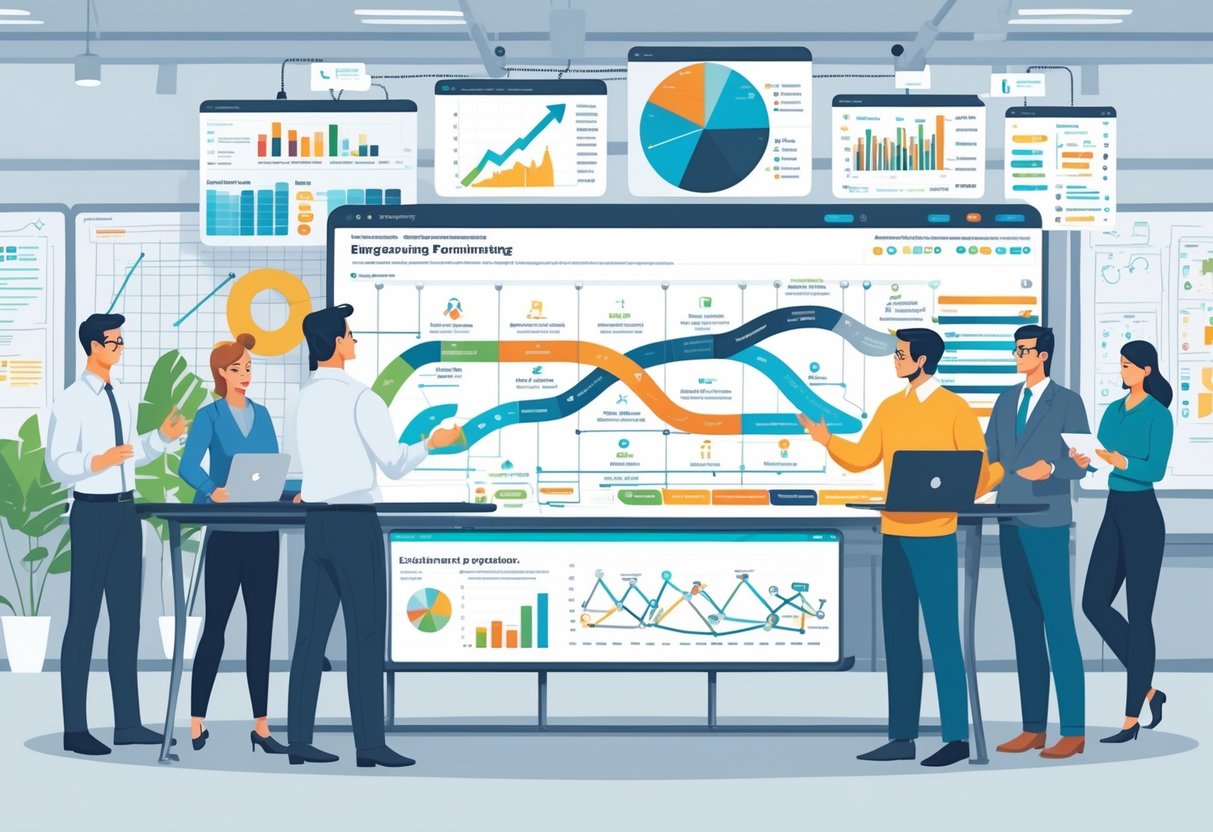
Strong execution requires clear team structures, flexible planning systems, and disciplined progress tracking. Engineering leaders balance stability with adaptability while maintaining visibility across complex deliverables.
Team Structuring and Roles
Engineering departments perform best when roles align with both technical skills and decision-making authority. Successful teams define who owns each deliverable, who provides input, and who needs updates. The RACI framework clarifies these boundaries by assigning Responsible, Accountable, Consulted, and Informed roles to every major task.
Backend engineers typically own API development while engineering leads remain accountable for delivery timelines. Product managers get consulted on requirements, and stakeholders stay informed through regular updates. This structure prevents duplicate work and eliminates confusion about task ownership.
Teams using project management tools assign tasks with visible capacity limits to prevent overload. Workload views show who has bandwidth and who needs support redistributed. High-performing organizations track workload distribution weekly, adjusting assignments based on skill fit and availability rather than defaulting to the same engineers repeatedly.
Adapting Roadmaps to Change
Static roadmaps fail when market conditions shift or technical blockers emerge. Engineering leaders build flexibility into planning cycles by treating roadmaps as living documents that absorb new information. Effective engineering management incorporates regular review points where teams reassess priorities based on customer feedback, infrastructure constraints, or competitive threats.
Sprint-based execution creates natural checkpoints for roadmap adjustments. Teams running two-week sprints review task priorities at sprint boundaries, moving lower-impact work to the backlog when urgent needs surface. Gantt charts display timeline dependencies, making it clear which delays cascade into other deliverables.
Top engineering teams maintain a ranked backlog separate from committed work. When priorities change, they pull from this backlog rather than scrambling to define new tasks. This approach preserves momentum while accommodating unexpected requirements or technical debt that blocks progress.
Monitoring Progress and Adjustments
Real-time visibility prevents small delays from becoming major setbacks. Kanban boards track task movement through stages like "In Progress," "Code Review," and "Completed," exposing bottlenecks before they compound. Engineering leaders check these boards daily to identify stuck tasks and reassign resources accordingly.
Burndown charts measure remaining work against available time, showing whether the team will hit deadlines at the current pace. When burndown trajectories flatten, strong teams investigate immediately rather than waiting for sprint end. They identify whether scope expanded, dependencies stalled, or estimates missed reality.
Leading organizations calculate lead time and slack time to understand delivery speed and schedule flexibility. Lead time reveals how long tasks actually take from start to finish, including wait periods. Slack time shows buffer available before a delay impacts downstream work. Teams tracking these metrics spot process inefficiencies and adjust workflows to eliminate unnecessary handoffs or approval delays.
Roadmap Best Practices for Modern Teams
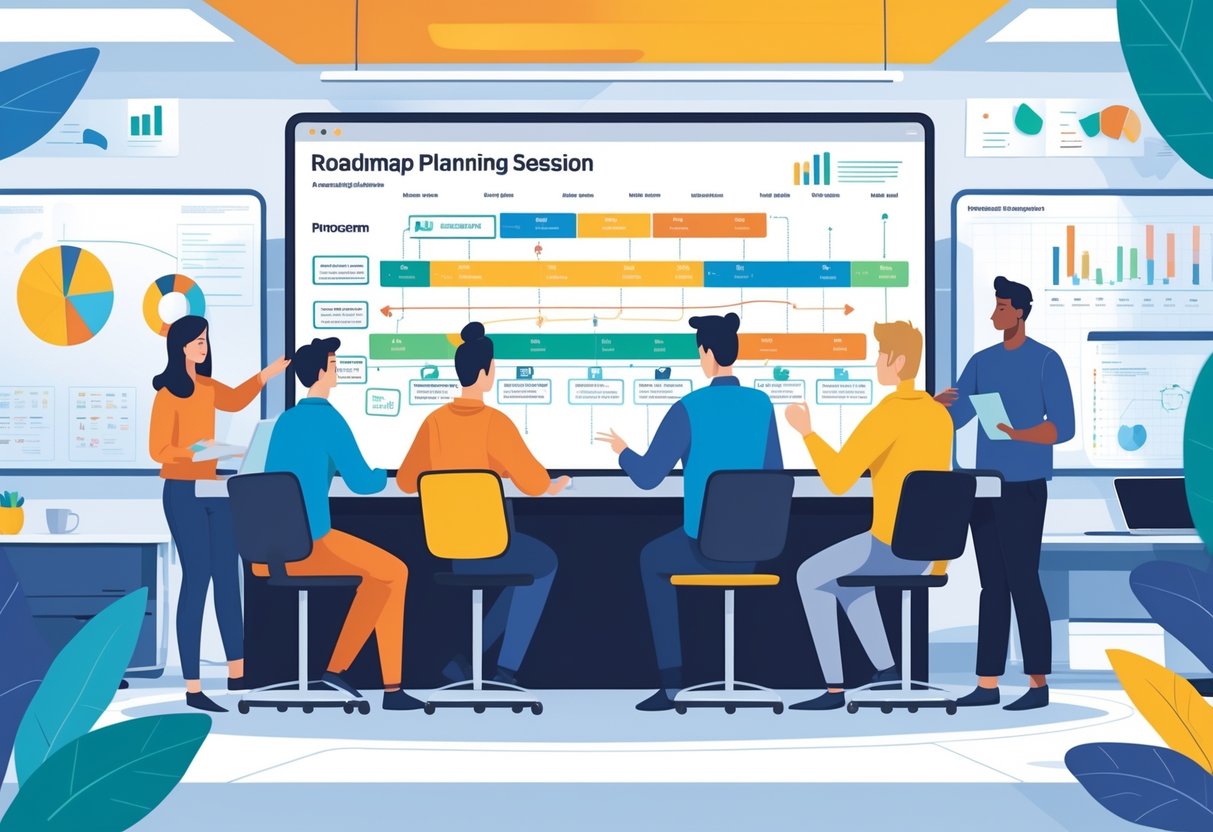
Engineering teams balance technical debt against feature velocity while maintaining alignment across multiple product streams. Effective roadmaps require structured communication protocols and frequent reassessment cycles to adapt to changing technical constraints.
Innovation and Technical Debt Balance
Teams allocate 20-30% of sprint capacity to technical debt reduction to maintain sustainable development velocity. This ratio prevents the accumulation of architectural shortcuts that compound over time.
Engineering leaders track debt-to-feature ratios using metrics like code complexity scores and deployment frequency. When mobile applications require platform updates or security patches, teams schedule these alongside feature work rather than deferring them. A structured approach involves categorizing debt by severity: critical items blocking future work receive immediate attention, while minor refactoring gets scheduled in maintenance windows.
High-performing organizations use debt allocation frameworks:
- Critical debt (20-30% of capacity): Security vulnerabilities, breaking dependencies, blockers
- Strategic debt (10-15% of capacity): Architecture improvements, scalability work
- Opportunistic debt (5-10% of capacity): Code cleanup during related feature work
Product development teams that ignore technical debt see 40-60% slower feature delivery within 18 months. Teams document debt in the same tools as feature work, making trade-offs visible during planning sessions.
Cross-Team Communication Strategies
Collaborative roadmapping exercises align engineering, product, and design teams on shared milestones before sprint planning begins. Weekly sync meetings between team leads surface dependencies before they become blockers.
Software development organizations use shared documentation systems where each team maintains API contracts and integration requirements. When mobile and backend teams work on connected features, they establish integration checkpoints at the epic level. Teams define clear ownership boundaries using RACI matrices that specify who approves architectural decisions versus who implements them.
Effective communication structures include:
- Asynchronous updates through written briefs posted in central repositories
- Biweekly architecture review boards for cross-cutting technical decisions
- Dedicated Slack channels per epic with stakeholders from all affected teams
Teams standardize on visual roadmap formats that non-technical stakeholders understand without explanation. Codeinate breaks down these exact communication frameworks every week, showing how technical leaders at scaling companies structure information flow to avoid coordination overhead.
Review and Iteration Cycles
Engineering roadmaps require monthly review sessions where teams assess completed work against original estimates. Teams compare planned versus actual velocity to refine future estimates and identify process bottlenecks.
Quarterly roadmap revisions account for changing business priorities and technical discoveries made during implementation. Teams use retrospectives to capture lessons about estimation accuracy, dependency management, and resource allocation. When product development priorities shift, teams reprioritize epics using weighted scoring models based on business value, technical risk, and resource availability.
Review cycles incorporate:
- Sprint-level retrospectives capturing tactical execution issues
- Monthly milestone reviews comparing delivered features to roadmap commitments
- Quarterly strategic reviews adjusting long-term priorities based on market feedback
Teams maintain a changelog of roadmap modifications to track decision patterns over time. This historical data reveals whether teams consistently underestimate infrastructure work or overcommit to parallel workstreams. Organizations that skip regular reviews accumulate outdated commitments that obscure actual progress from stakeholders.
Wake Up Your Tech Knowledge
Join 40,000 others and get Codeinated in 5 minutes. The free weekly email that wakes up your tech knowledge. Five minutes. Every week. No drowsiness. Five minutes. No drowsiness.