Engineering Team Communication Best Practices: Secure Your Edge with Proven Systems
Improve engineering team communication. Learn best practices for async communication, documentation, and cross-team collaboration.
Posted by
 Joseph Kaplan
Related reading
AI's Impact on Engineering Organization Structure [Reshape Your Tech Teams Now!]
Understand how AI is transforming engineering team structures and roles. Learn strategies for reorganizing teams, upskilling engineers, and building AI-native organizations.
Decision Making for Engineers: Gain Strategic Systems Insight Now
Develop decision-making frameworks for engineers. Learn how to evaluate trade-offs, manage uncertainty, and make high-impact technical decisions.
Measure and improve developer experience. Learn how to track DevEx metrics and create an environment where engineers thrive.
Core Principles of Effective Engineering Team Communication
Strong engineering teams operate on three foundational elements: clear information flow, standardized protocols, and environments where technical challenges surface early. These principles directly impact deployment velocity, incident response times, and the quality of architectural decisions.
Building Clarity and Transparency
Engineering managers must establish specific channels for different types of information. Status updates belong in project management tools, not buried in chat threads. Technical decisions require documentation that explains the reasoning, alternatives considered, and trade-offs accepted.
Transparent communication means sharing data broadly. Teams perform better when engineers can access usage metrics, performance benchmarks, and customer feedback without approval chains. One approach involves holding monthly meetings where leaders share what occupies their attention, empowering managers to align their teams with organizational priorities.
Documentation standards matter more than most teams admit. Pull request descriptions should explain the problem solved, not just list changed files. Design documents need clear sections for requirements, proposed solutions, and rejected alternatives. This creates artifacts that new team members reference months later when similar problems emerge.
Setting Communication Protocols
Distributed teams need asynchronous communication practices that let engineers work across time zones. This requires a single source of truth for project status. Whether teams use Linear, Jira, or GitHub Projects, everyone must understand how to update task states, log blockers, and communicate dependencies.
Standardized terminology prevents confusion. When one team calls something "ready for review" and another calls it "pending QA," coordination breaks down. Teams should define issue states, priority levels, and severity classifications consistently.
Meeting protocols preserve focus time. Status updates move to written channels. Synchronous time gets reserved for technical discussions, pair programming, and collaborative problem-solving. Teams that demo work weekly spend less time explaining progress and more time addressing technical challenges. Weekly project updates posted to dedicated channels keep stakeholders informed without interrupting engineers.
Fostering Open Dialogue
Engineering leaders who ask good questions create teams that surface problems early. Instead of transactional exchanges, technical forums should encourage deep questions about implementation choices. When engineers explain complex functions to their peers, everyone reaches the same knowledge level, enabling better architectural discussions.
Direct feedback delivered with empathy builds trust faster than avoiding difficult conversations. If code quality needs improvement, addressing it explicitly with support resources helps engineers grow. This approach removes fear of criticism and shifts focus to skill development.
Technical leaders demonstrate the communication patterns they want to see. Leaders who document decisions thoroughly, ask clarifying questions, and share context broadly set expectations through behavior. Teams mirror these habits when they see consistent modeling from engineering management.
Key Communication Skills for Engineering Teams
Wake Up Your Tech Knowledge
Join 40,000 others and get Codeinated in 5 minutes. The free weekly email that wakes up your tech knowledge. Five minutes. Every week. No drowsiness. Five minutes. No drowsiness.
Strong engineering teams rely on precise verbal exchanges, attentive listening practices, and clear translation of complex concepts. These skills directly impact sprint velocity, reduce rework cycles, and ensure alignment between technical execution and business objectives.
Verbal and Non-Verbal Communication
Engineers must articulate architectural decisions, system constraints, and trade-offs with clarity during standups, design reviews, and stakeholder meetings. Verbal communication skills enable technical leaders to justify infrastructure investments, explain latency improvements, or present API design choices without ambiguity.
Body language reinforces or undermines spoken messages. An engineer who maintains eye contact during sprint planning signals confidence in proposed solutions. Crossed arms or turned-away posture during code reviews can shut down productive technical debate. Teams that optimize for effective communication in engineering train members to recognize when non-verbal cues indicate confusion or disagreement.
Video calls require heightened awareness of digital body language. Engineers should position cameras at eye level, use screen sharing to anchor discussions in concrete artifacts like pull requests or dashboards, and avoid multitasking during synchronous collaboration. Top teams record architecture discussions and tag timestamps for asynchronous review, ensuring distributed members access the same context without relying solely on meeting notes.
Active Listening Techniques
Active listening prevents costly misinterpretations of requirements, reduces duplicate work, and surfaces edge cases earlier in the development cycle. Engineers who practice this skill paraphrase technical requirements back to product managers before committing to implementation timelines.
During incident response, active listening means repeating back symptoms, hypothesized root causes, and proposed mitigation steps before executing commands in production environments. This confirmation loop catches misaligned assumptions that could extend downtime.
Teams should implement structured listening protocols in design reviews. One engineer presents the architecture, another summarizes each major component's purpose and boundaries, and a third identifies unstated dependencies or scaling concerns. This rotation forces all participants to engage deeply rather than passively reviewing slides. Engineering leaders who master communication techniques report 30% fewer post-launch defects when teams adopt these structured listening patterns.
Addressing Technical Jargon
Technical jargon serves as efficient shorthand among specialists but creates friction in cross-functional collaboration. An engineer explaining "eventual consistency guarantees in a CRDT-based sync layer" to a sales engineer should translate it to "changes sync across devices within seconds, even offline."
Teams should maintain a living glossary of domain-specific terms tied to actual system components. Instead of abstract definitions, entries link to code repositories, monitoring dashboards, or design documents. When an engineer references "the ingestion pipeline," stakeholders click through to see Kafka topic configurations and throughput metrics.
Context-switching between technical and business vocabulary becomes instinctive with practice. Engineers presenting to executive teams should anchor explanations in business outcomes - cost per transaction, time to market, or customer-facing latency - rather than implementation details. Conversely, technical deep-dives with platform teams demand precision around algorithm complexity, data structure selection, and dependency management strategies that shape system reliability and performance profiles.
Feedback Strategies and Continuous Improvement
Engineering teams that implement structured feedback mechanisms see measurable gains in code quality, deployment velocity, and retention. Regular performance conversations tied to technical outcomes create alignment between individual growth and system-level improvements.
Implementing Continuous Feedback
Continuous feedback replaces annual review cycles with real-time, context-specific exchanges that happen during code reviews, incident retrospectives, and sprint planning. High-performing engineering organizations build feedback into their daily workflows rather than treating it as a separate HR exercise.
Engineering leaders integrate feedback touchpoints directly into pull request workflows. When a senior engineer leaves inline comments on architecture decisions or suggests refactoring patterns, they're delivering immediate, actionable guidance. Teams using platforms like GitHub or GitLab configure automated reminders for review turnaround times, ensuring feedback arrives while context is fresh.
Weekly one-on-ones focus on technical blockers, skill development, and career trajectory. These sessions address specific challenges: API design decisions, database optimization approaches, or distributed systems trade-offs. Managers who track these conversations in tools like Lattice or 15Five maintain continuity and measure progress against defined engineering competencies.
Building a continuous feedback loop allows teams to adapt in real-time to technical changes. Organizations that formalize these practices report stronger employee engagement and faster resolution of architectural bottlenecks.
Constructive Performance Reviews
Performance reviews in engineering contexts should quantify impact through metrics like deployment frequency, mean time to recovery, change failure rate, and code review response times. Reviews that cite concrete examples - a microservices migration completed ahead of schedule, a reduction in P0 incidents, or mentorship that accelerated junior developer productivity - carry more weight than generic assessments.
Effective reviews connect individual contributions to business outcomes. An engineer who refactored a legacy payment service might see acknowledgment of the 40% latency reduction and corresponding decrease in customer support tickets. Another who championed observability improvements receives recognition for the telemetry framework that cut incident response time.
Engineering managers structure reviews around a competency matrix covering technical depth, system design, collaboration, and delivery execution. They benchmark performance against leveling guides that define expectations for each role. This approach provides clarity on promotion criteria and skill gaps.
Constructive criticism addresses specific behaviors with improvement paths. Instead of "needs better communication," feedback might state: "During the Q3 planning discussion, alternative database choices weren't surfaced early enough. Next quarter, document trade-off analyses in the RFC process before the team commits to implementation."
Establishing Feedback Loops
Feedback loops transform isolated observations into systematic improvement. Engineering teams establish multiple channels: retrospectives after incidents and releases, regular architecture review boards, and cross-functional communication practices that gather input across organizational boundaries.
Post-incident reviews follow a blameless format. Teams document what happened, why systems behaved unexpectedly, and what changes prevent recurrence. They track action items in issue trackers with assigned owners and due dates. Organizations that treat these reviews as learning exercises rather than fault-finding sessions build psychological safety that encourages honest assessment.
Architecture decision records (ADRs) create feedback mechanisms for technical choices. When teams revisit these documents quarterly, they evaluate whether predicted outcomes materialized. Did the chosen database handle scale? Did the message queue reduce coupling as expected? This reflection informs future decisions.
Engineering leaders track feedback effectiveness through metrics: time from identification to resolution, participation rates in retrospectives, and survey data on psychological safety. They adjust processes based on what engineers actually use versus what gets ignored.
Optimizing Team Meetings and Collaboration

Engineering teams waste up to 30% of project time on poorly structured meetings and misaligned collaboration. Effective meeting protocols, strategic use of visual communication tools, and deliberate cross-functional workflows reduce delays and improve decision quality.
Best Practices for Team Meetings
Engineering meetings require clear agendas distributed 24 hours in advance with specific decision points identified. Each meeting should have a designated owner responsible for timeboxing discussions and capturing action items with assigned owners and deadlines.
Effective meeting structures include:
- Daily standups: 15 minutes maximum, focusing on blockers and dependencies
- Sprint planning: Time-boxed requirements review with acceptance criteria validation
- Design reviews: Technical architecture discussions with pre-circulated diagrams
- Retrospectives: Blameless post-mortems identifying process improvements
Teams operating across time zones benefit from asynchronous updates through centralized documentation systems that maintain single sources of truth. Recording technical decisions in searchable formats prevents repeated discussions and enables new team members to understand context quickly.
High-performing teams limit meeting attendance to essential participants. Optional attendees receive meeting notes rather than calendar invites, reducing context-switching costs for engineers in deep work.
Utilizing Visual Aids
Technical concepts communicated through visual aids reduce misunderstanding by 40% compared to text-only documentation. Engineers should use architecture diagrams, sequence charts, and data flow visualizations during design discussions.
Essential visual communication tools:
| Tool Type | Use Case | Impact |
|---|---|---|
| System diagrams | Architecture decisions | Clarifies component interactions |
| Gantt charts | Project timelines | Highlights critical path dependencies |
| Flowcharts | Process documentation | Standardizes workflow understanding |
| Wireframes | Feature specifications | Aligns product and engineering teams |
Presentation skills matter when engineering leaders explain technical trade-offs to non-technical stakeholders. Effective presentations layer information progressively, starting with business impact before diving into implementation details. Teams that invest in visual communication templates accelerate onboarding and reduce documentation overhead across project management cycles.
Wake Up Your Tech Knowledge
Join 40,000 others and get Codeinated in 5 minutes. The free weekly email that wakes up your tech knowledge. Five minutes. Every week. No drowsiness. Five minutes. No drowsiness.
Cross-Functional Collaboration
Effective cross-functional communication requires engineers to translate technical constraints into business outcomes. Product managers need delivery timelines and risk assessments, while engineering teams need clear requirement priorities and success metrics.
Organizations achieve 20% better performance when they establish shared accountability models between functions. Engineers participate in customer discovery sessions to understand use cases directly. Product teams attend architecture reviews to grasp technical limitations early.
Integration approaches that reduce friction:
- Shared project management dashboards with real-time status visibility
- Regular cross-team demos showcasing incremental progress
- Joint retrospectives examining hand-off points between functions
- Unified metrics tracking both feature delivery and system stability
Teams using integrated tool ecosystems eliminate duplicate data entry and version control conflicts. Engineering platforms that connect requirements tracking, code repositories, and deployment pipelines create traceability from business goal to production release.
Utilizing Communication Tools and Technology
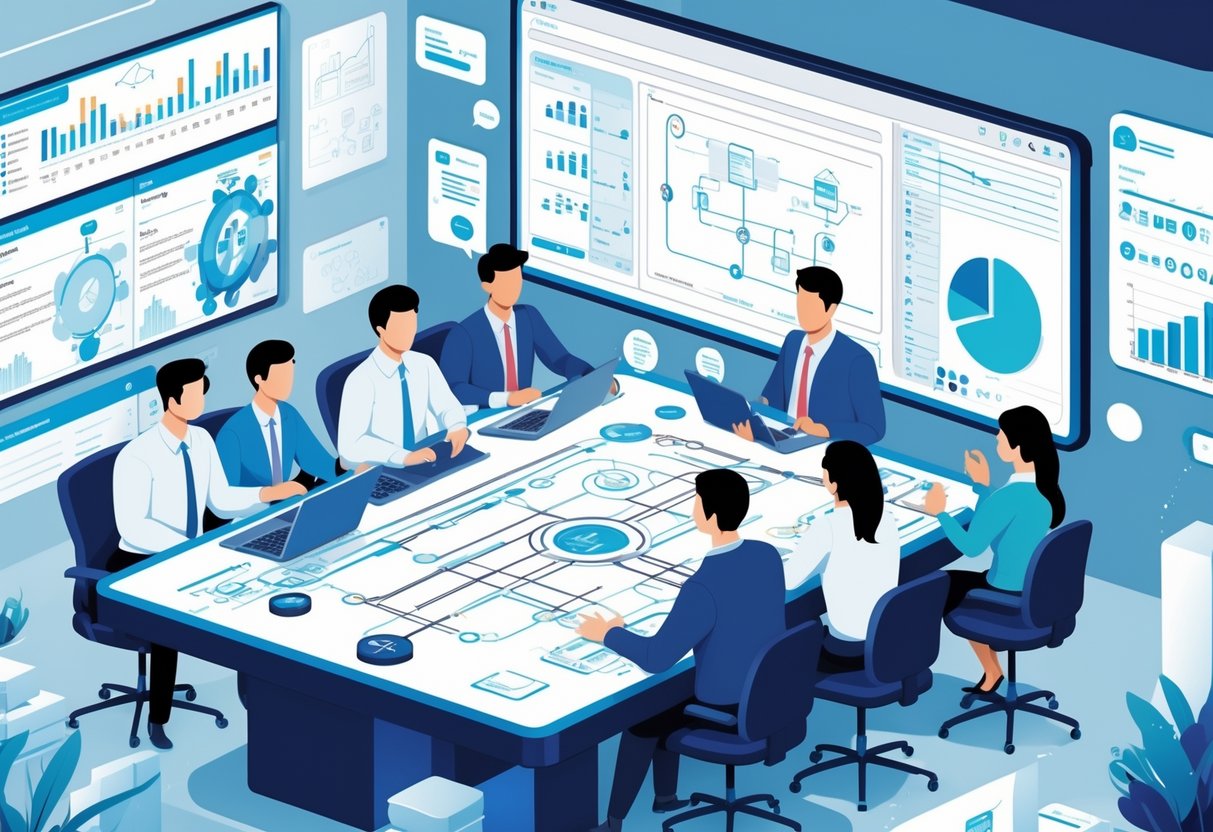
Engineering teams need platforms that reduce friction in daily workflows while preserving context across asynchronous handoffs. The right technology stack enables teams to maintain documentation standards, coordinate distributed contributors, and make architectural decisions visible across organizational boundaries.
Video Conferencing Essentials
Video conferencing platforms serve as the primary medium for technical design reviews, incident response coordination, and cross-functional alignment sessions. Teams should evaluate platforms based on screen-sharing performance, recording capabilities, and integration with existing development environments.
High-performing engineering organizations establish clear protocols for when synchronous video calls add value versus when asynchronous documentation better serves the team. Design reviews benefit from live video sessions where engineers can walk through architecture diagrams and discuss trade-offs in real time. Incident response situations require video channels with reliable audio quality and minimal latency to coordinate debugging efforts across multiple contributors.
Recording capabilities become critical for teams operating across time zones. Engineers who miss live sessions need access to searchable transcripts and timestamp navigation to extract relevant technical details without watching entire recordings.
The platform selection should account for bandwidth constraints when team members work from varied network conditions. Teams building global products often standardize on platforms that maintain connection stability even when individual contributors experience degraded connectivity.
Project Management Software Integration
Project management software creates a single source of truth for sprint planning, backlog prioritization, and release coordination. Engineering leaders configure these tools to surface blockers, track dependencies between services, and maintain visibility into technical debt accumulation.
Effective implementations link code repositories directly to task tracking systems. When engineers create pull requests, the associated ticket automatically updates with build status, test coverage metrics, and deployment progression. This integration eliminates manual status updates and keeps project timelines accurate.
Teams should structure their project boards to reflect actual engineering workflows rather than generic templates. A microservices architecture requires different board configurations than a monolithic application because dependencies and deployment patterns differ fundamentally.
Notification settings require careful calibration to prevent alert fatigue. Engineers need immediate visibility into failed CI/CD pipelines and critical production issues while batching non-urgent updates into daily digests. Teams that master this balance maintain high responsiveness without fragmenting focus during deep work sessions.
Leveraging Microsoft Teams
Microsoft Teams serves as a collaboration hub that consolidates chat, file sharing, and application integration into a unified workspace. Engineering teams use Teams to organize channels around specific services, infrastructure components, or cross-functional initiatives.
Channel structure should mirror the team's architecture and ownership model. A team responsible for payment processing might maintain separate channels for API development, fraud detection systems, and compliance documentation. This organization keeps conversations contextual and prevents important technical discussions from getting buried in general channels.
The platform's integration capabilities allow teams to surface GitHub notifications, deployment status updates, and monitoring alerts directly within relevant channels. Engineers receive critical information without context-switching between multiple applications, which preserves focus during complex implementation work.
File versioning within Teams channels enables teams to maintain living documentation alongside active discussions. Architecture decision records, API specifications, and runbook procedures stay accessible to all contributors while maintaining edit history for accountability. Teams should establish naming conventions and folder structures that make locating specific documents intuitive even as the repository grows over time.
Role of Engineering Leaders in Communication
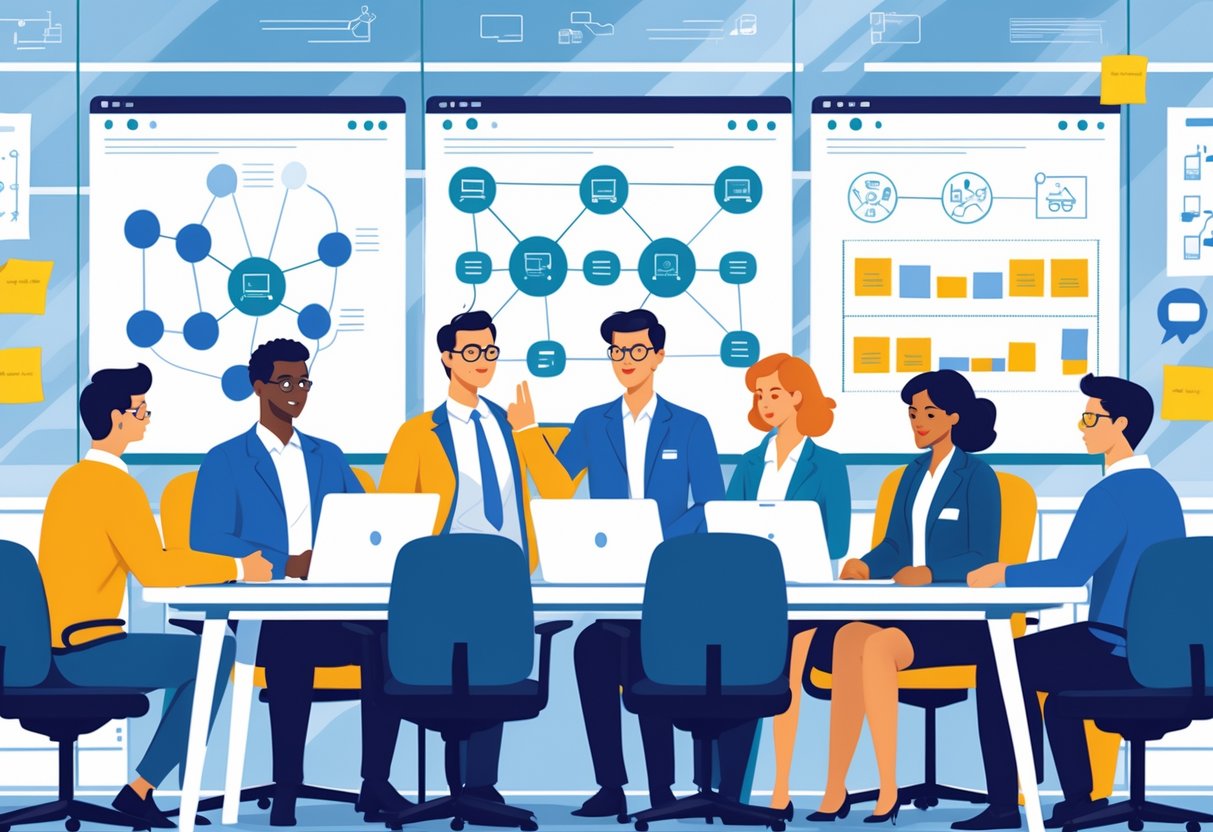
Engineering leaders set the tone for how their teams exchange information, resolve conflicts, and align on technical decisions. Their ability to demonstrate clear communication patterns, balance directness with understanding, and create opportunities for team members to build confidence shapes how effectively the organization operates.
Modeling Communication Techniques
Engineering leaders drive communication quality by demonstrating specific behaviors in daily interactions. When a leader consistently documents architectural decisions in ADRs, writes detailed pull request descriptions, or maintains up-to-date project status in Linear or Jira, team members adopt these same practices.
Leaders who share data frequently and transparently empower engineers to make independent decisions aligned with business goals. This means publishing sprint metrics, system performance dashboards, and incident post-mortems where the full team can access them. One effective pattern involves holding monthly forums where leaders share what's currently consuming their focus, giving managers context to cascade priorities accurately.
Key modeling behaviors include:
- Writing comprehensive design documents before major refactors
- Asking clarifying questions in code reviews rather than making assumptions
- Updating ticket statuses immediately when work shifts
- Recording technical decisions with clear rationale in accessible repositories
Leaders must also model asynchronous communication standards. In distributed teams, establishing a source of truth for project tracking eliminates confusion about where to find current status information.
Empathy and Courage in Team Leadership
Effective engineering leaders combine empathy with courage to deliver feedback that drives improvement without damaging trust. This balance requires caring personally about team members while being direct about performance gaps or technical mistakes.
Radical candor represents this approach in practice. When code quality needs improvement, leaders address it directly while offering concrete support like pairing sessions or additional context on standards. This creates psychological safety where engineers speak up about risks, blockers, or architectural concerns without fear of criticism.
Leaders demonstrate empathy by actively listening to both verbal and nonverbal cues during one-on-ones and team discussions. They acknowledge workload stress, celebrate small wins, and adjust project timelines when teams surface legitimate capacity constraints.
The courage component means having difficult conversations early. When technical debt threatens velocity or an engineer consistently misses commitments, leaders address these issues immediately rather than letting them compound. They frame these discussions around observable behaviors and impact rather than personal judgments.
Encouraging Public Speaking and Presentation
Engineering leaders build team communication capacity by creating structured opportunities for engineers to present technical work. This includes internal tech talks, architecture review sessions, and cross-functional project demos.
Leaders reduce presentation anxiety by starting with low-stakes formats. An engineer might first demo a feature to their immediate team, then present to the broader engineering group, and eventually deliver customer-facing demonstrations. Each step builds confidence and refines their ability to explain complex systems.
Effective presentation frameworks include:
- Weekly demo sessions where engineers show work-in-progress
- Monthly technical deep-dives on system components
- Quarterly architecture reviews with cross-team attendance
- Customer advisory board presentations for senior engineers
Leaders coach engineers on adapting technical depth to audience expertise. Explaining a caching strategy to fellow engineers requires different language than presenting the same solution to product managers or executives. Translating technical concepts for non-technical stakeholders remains a critical skill that distinguishes technical managers from influential business leaders.
Creating a culture where engineers regularly present work also surfaces knowledge gaps early. When an engineer struggles to explain their approach, it often indicates unclear requirements or insufficient design thinking before implementation.
Communication's Impact on Project Success

Strong communication directly determines whether engineering projects meet deadlines, stay within budget, and deliver expected functionality. The way teams share information shapes accountability structures, prevents technical debt accumulation, and resolves interpersonal friction before it derails delivery timelines.
Linking Communication to Project Outcomes
Effective communication is one of the top factors that contribute to project success, with research showing projects are more likely to meet objectives and stay on schedule when teams communicate well. When engineers clearly document architectural decisions, share system constraints early, and align on acceptance criteria before coding begins, they reduce rework cycles by 30-40%.
Teams that implement structured communication protocols see measurable improvements in delivery velocity. Daily standups focused on blockers rather than status updates help engineers escalate dependency issues within hours instead of days. Sprint retrospectives that analyze communication breakdowns - not just feature completion - enable teams to refine their information flow patterns.
The connection between communication quality and project outcomes becomes visible in defect rates. Projects where engineers ask clarifying questions before implementation and validate assumptions through technical design reviews ship with fewer critical bugs. This precision stems from teams treating communication as an engineering discipline with measurable inputs and outputs.
Driving Accountability and Clarity
Clear communication creates explicit ownership boundaries that prevent work from falling through gaps between team members. When project managers define who owns each system component, document decision-making authority, and establish escalation paths, engineers spend less time navigating organizational ambiguity.
Key accountability mechanisms include:
- Decision logs that capture who approved architectural changes and why
- RACI matrices mapping responsible, accountable, consulted, and informed parties for each deliverable
- Definition of done checklists specifying completion criteria before tasks move to review
Engineering leaders who require written communication for significant technical decisions build an audit trail that clarifies accountability when issues arise. Slack threads and email chains documenting design trade-offs prevent "he said, she said" conflicts during post-mortems. This documentation discipline also helps new team members understand historical context without requiring extensive knowledge transfer sessions.
Addressing Team Dynamics for Success
Technical complexity, cultural barriers, and information overload create common communication challenges that disrupt team dynamics if left unaddressed. Senior engineers often communicate using domain-specific jargon that excludes junior team members, creating knowledge silos that slow feature development.
High-performing teams establish communication norms that accommodate different working styles and experience levels. Some engineers prefer asynchronous communication through detailed documentation, while others need real-time discussion to process complex system designs. Teams that offer both options see higher participation rates in technical discussions.
Distributed teams face additional dynamics challenges when time zones limit synchronous collaboration windows. Engineering managers who rotate meeting times to share inconvenience fairly and record technical sessions for async viewing maintain team cohesion. These practices prevent remote engineers from becoming disconnected from core decision-making processes, which would otherwise create divergent mental models of system architecture.
Wake Up Your Tech Knowledge
Join 40,000 others and get Codeinated in 5 minutes. The free weekly email that wakes up your tech knowledge. Five minutes. Every week. No drowsiness. Five minutes. No drowsiness.