Leadership Frameworks for Technical Leaders: Gain Competitive Edge Now
Master leadership frameworks for technical leaders. Learn proven models for decision-making, team development, and strategic execution.
Posted by
 Joseph Kaplan
Related reading
Decision Making for Engineers: Gain Strategic Systems Insight Now
Develop decision-making frameworks for engineers. Learn how to evaluate trade-offs, manage uncertainty, and make high-impact technical decisions.
Engineering Leadership in Budget-Constrained Environments [Don't Miss These Key Tactics!]
Lead engineering teams with limited budgets. Learn strategies for maximizing impact, prioritizing investments, and delivering value with constraints.
Engineering Leadership: Systems-Level Strategies to Win in Tech
Master the essential skills and frameworks for engineering leadership. Learn how to balance technical depth with team development, make strategic decisions, and drive business impact.
Core Leadership Frameworks for Technical Leaders
Technical leaders need structured approaches that balance deep technical expertise with people management. The most effective frameworks help engineering leaders make faster decisions, build high-performing teams, and align technical work with business outcomes.
Technical Competency Models
Technical competency models define the specific skills and knowledge levels required at each engineering leadership tier. These models map out progression paths from individual contributor to technical leader, outlining both hard technical skills and soft leadership capabilities.
Strong models separate technical leadership from people leadership by clarifying when to influence through expertise versus formal authority. Technical leaders use their deep knowledge of system design, architecture patterns, and toolchain selection to guide teams without relying on hierarchical power.
The best competency frameworks include concrete benchmarks. They specify proficiency levels in areas like distributed systems design, API architecture, observability tooling, and cost optimization strategies. They also define how technical leaders should evaluate trade-offs between build versus buy decisions or assess when to refactor versus ship.
High-growth teams update their competency models quarterly to reflect emerging patterns. This includes new capabilities around AI integration strategies, modern data pipeline design, and platform engineering practices that reduce deployment friction.
Situational Leadership for Tech Teams
Situational leadership adapts management style based on team maturity and task complexity. Technical leaders adjust their approach from directive to delegative depending on whether engineers need hands-on guidance or autonomous problem-solving space.
For junior engineers tackling unfamiliar technical challenges, leaders provide specific architectural guidance and code review feedback. They might prescribe exact implementation patterns for critical systems where failure carries high cost.
Senior engineers working on well-understood problems receive minimal oversight. Technical leaders focus on clearing blockers, securing resources, and ensuring alignment with broader platform strategy rather than dictating solutions.
This framework proves especially valuable during incidents or tight deadlines. Leaders shift to more directive styles when quick decisions prevent cascading failures. They return to collaborative approaches once stability returns and teams can resume normal innovation cycles.
Transformational and Servant Leadership in Engineering
Transformational leadership focuses on inspiring teams toward ambitious technical goals that exceed current capabilities. These leaders articulate compelling visions for platform evolution, engineering excellence standards, and system performance targets that push teams beyond incremental improvements.
Servant leadership in technical roles prioritizes removing obstacles that slow engineering velocity. Leaders spend time eliminating toil through automation, securing budget for better tooling, and protecting teams from organizational friction.
The combination works well in engineering organizations. Transformational approaches drive adoption of new technologies and architectural patterns. Servant leadership ensures teams have the infrastructure, tools, and psychological safety needed to execute bold technical initiatives.
Elite technical leaders use both frameworks simultaneously. They challenge teams to rebuild legacy systems with modern patterns while personally tackling procurement delays, compliance bottlenecks, and cross-team coordination problems that would otherwise stall progress.
Selecting the Right Leadership Framework
Choosing the right framework for tech leaders depends on team composition, organizational maturity, and specific technical challenges. Early-stage startups need technical leaders who make fast architectural decisions and write code alongside teams. Large enterprises require leaders who navigate complex stakeholder landscapes and manage distributed engineering organizations.
Technical leaders should assess their context through specific questions. What is the team's technical skill distribution? How stable are requirements and system architectures? What degree of autonomy does the organization support? How much technical debt exists in current systems?
Leaders often blend multiple frameworks rather than adopting one exclusively. They might use situational leadership for day-to-day team management while applying transformational approaches when launching major platform initiatives or driving engineering culture changes.
The most effective technical leaders regularly evaluate whether their current framework still fits. They adjust based on team growth, technical complexity shifts, and changing business priorities. Codeinate covers how engineering leaders at high-growth companies adapt their leadership models as they scale from 20 to 200+ engineers, including specific decision points that trigger framework evolution.
Building Essential Skills for Technical Leadership
Wake Up Your Tech Knowledge
Join 40,000 others and get Codeinated in 5 minutes. The free weekly email that wakes up your tech knowledge. Five minutes. Every week. No drowsiness. Five minutes. No drowsiness.
Technical leaders must master decision-making in ambiguous situations, translate complex ideas across audiences, and navigate team dynamics through emotional awareness. These capabilities determine whether engineering initiatives deliver measurable business impact or stall in execution.
Decision Making Under Uncertainty
Technical leaders face decisions with incomplete data daily. They evaluate build-versus-buy trade-offs, assess whether to refactor legacy systems or ship incremental improvements, and determine when to adopt emerging technologies.
High-performing leaders use structured frameworks to reduce uncertainty. They establish decision criteria upfront - cost thresholds, timeline constraints, team capacity, and technical debt tolerance. When evaluating tools or architecture patterns, they run time-boxed proofs of concept rather than relying on vendor claims or conference presentations.
Key decision-making practices include:
- Setting explicit reversal costs before committing to architectural changes
- Documenting assumptions that would invalidate current plans
- Establishing metrics to validate hypotheses within 30-60 days
- Creating decision logs that track reasoning and outcomes
Non-technical skills like problem-solving and decision-making rank highest for tech leadership effectiveness. Leaders who build systematic approaches to uncertainty create teams that move faster and course-correct earlier than those relying on intuition alone.
Effective Communication Techniques
Communication skills determine whether technical strategies gain organizational support. Leaders must translate architecture decisions into business outcomes for executives, explain trade-offs to product teams, and provide clear technical direction to engineers.
Effective technical leaders adjust their communication based on audience expertise. When presenting to executives, they focus on cost profiles, timeline impacts, and competitive positioning rather than implementation details. For engineering teams, they specify success criteria, constraints, and decision authority boundaries.
Communication formats that drive clarity:
- Architecture decision records (ADRs) that capture context and consequences
- Weekly engineering updates with metrics on velocity, quality, and blockers
- Technical RFCs with explicit feedback windows and decision timelines
- Post-mortems that identify system improvements without assigning blame
Leaders who develop strong communication and collaboration skills create environments where teams surface problems early and align on solutions faster.
Emotional Intelligence for Leaders
Emotional intelligence shapes how technical leaders handle conflict, provide feedback, and maintain team performance under pressure. It involves recognizing team stress signals, managing one's own reactions during incidents, and building psychological safety.
Technical leaders with high emotional intelligence notice when engineers disengage during planning sessions or when code review tone becomes defensive. They address these patterns directly through one-on-ones rather than letting dysfunction compound.
They also calibrate feedback delivery. Critical technical feedback requires different framing than behavioral coaching. When discussing code quality issues, emotionally intelligent leaders separate the work from the person and focus on specific improvement paths rather than general criticism.
During production incidents or deadline pressure, these leaders model calm problem-solving. They ask clarifying questions, avoid blame statements, and focus team energy on resolution rather than fault-finding. This approach maintains team cohesion and preserves the trust required for future collaboration.
Driving Innovation and Managing Change
Technical leaders must balance the demands of rapid technological evolution with the need to maintain stable, high-performing systems. This requires building teams that learn continuously, creating environments where calculated experimentation drives progress, and implementing transformation strategies that align technical capabilities with business objectives.
Fostering a Culture of Continuous Learning
Technical leaders embed continuous learning into engineering operations by implementing structured knowledge-sharing mechanisms. Weekly architecture reviews, post-incident learning sessions, and internal tech talks create forums where engineers examine production failures, evaluate new technologies, and share lessons from recent deployments.
Leaders establish learning budgets that fund conference attendance, training subscriptions, and certification programs. They also create internal documentation systems where teams record architectural decisions, migration playbooks, and performance optimization techniques.
The most effective technical leaders measure learning outcomes through skill matrices and track how new capabilities translate into improved system performance or reduced incident rates. They encourage engineers to dedicate time to exploring emerging technologies like AI tools, cloud-native architectures, and observability platforms. This investment in managing technical innovation ensures teams stay current with industry best practices while avoiding the technical debt that accumulates when organizations fall behind on foundational knowledge.
Encouraging Innovation and Adaptability
Technical leaders create space for innovation by allocating percentage-based time budgets for experimentation alongside production work. They establish clear criteria for evaluating new tools and frameworks, including performance benchmarks, integration complexity, and long-term maintenance costs.
Innovation leadership requires balancing risk-taking with system stability. Leaders implement feature flags, canary deployments, and isolated test environments where teams can validate new approaches without jeopardizing production systems.
Technical leaders who drive innovation maintain open communication channels where engineers propose architectural improvements and challenge existing patterns. They review proposals against metrics like deployment frequency, mean time to recovery, and system scalability rather than dismissing ideas based on tradition alone.
Digital Transformation Strategies
Digital transformation in technical organizations demands methodical planning that connects infrastructure modernization with measurable business outcomes. Leaders begin by auditing existing systems to identify bottlenecks, security vulnerabilities, and scaling limitations that block future growth.
Successful transformation strategies prioritize migrations that deliver immediate value. Leaders sequence initiatives based on risk, cost, and impact - moving high-traffic services to cloud infrastructure before legacy batch processes, or implementing AI-powered code review tools that reduce defect rates before undertaking complete platform rewrites.
Technical leaders establish transformation roadmaps with quarterly milestones and success metrics. They track adoption rates, system performance improvements, and cost reductions to validate that investments deliver expected returns. They also build cross-functional alignment by demonstrating how technical changes enable product teams to ship features faster or support new market opportunities that were previously infeasible.
Leveraging Data, AI, and Digital Tools

Technical leaders now use AI and data analytics to make faster decisions, automate repetitive work, and scale their teams' impact. The shift requires choosing the right tools, building robust data pipelines, and creating governance frameworks that prevent technical debt.
AI in Leadership Decision Processes
Wake Up Your Tech Knowledge
Join 40,000 others and get Codeinated in 5 minutes. The free weekly email that wakes up your tech knowledge. Five minutes. Every week. No drowsiness. Five minutes. No drowsiness.
Technical leaders integrate AI into decision-making through predictive analytics, anomaly detection, and natural language processing tools that surface insights from vast datasets. AI tools in leadership contexts help identify bottlenecks in delivery pipelines, forecast resource needs, and flag risks before they escalate.
High-performing engineering organizations use AI to analyze code commit patterns, pull request velocity, and incident response times. These metrics inform architectural decisions and team structure changes. Leaders evaluate AI platforms based on integration complexity, model explainability, and inference latency.
The best teams avoid black-box AI systems that obscure how recommendations are generated. They build internal frameworks that combine AI suggestions with human judgment, especially for high-stakes decisions like system architecture or team reorganization. Tech-savvy domain leaders pair deep business expertise with hands-on technical capability to implement AI successfully.
Leaders also establish ethical guardrails around AI deployment. They audit models for bias, ensure data privacy compliance, and create review processes for AI-driven decisions that affect personnel or customer experiences.
Utilizing Data Analytics
Data analytics transforms how technical leaders track engineering health, measure feature impact, and allocate resources. Leaders build dashboards that monitor deployment frequency, mean time to recovery, change failure rate, and lead time for changes.
These metrics reveal whether architectural decisions improve system stability or create new failure modes. Engineering teams use analytics to compare the cost profiles of different cloud providers, database technologies, or observability tools. A shift from monolithic databases to distributed systems might reduce query latency but increase operational complexity and cost.
Leaders benchmark tools by running controlled experiments with real workloads. They measure memory consumption, throughput, and error rates under production-like conditions. This data-driven approach prevents costly migrations based on vendor marketing rather than actual performance.
Analytics also guides technical debt prioritization. Teams quantify the impact of legacy code by tracking bug frequency, patch time, and developer velocity in different modules. Leaders use this data to justify refactoring investments to business stakeholders.
Top engineering organizations share these analytical frameworks internally. They document tool evaluation criteria, decision logs, and post-mortems so future teams avoid repeating the same analysis.
Implementing Automation at Scale
Scaling AI deployment requires governance frameworks that remove roadblocks to successful implementation across multiple teams. Technical leaders automate infrastructure provisioning, testing pipelines, security scanning, and deployment workflows to reduce manual toil and increase release velocity.
Automation starts with identifying high-frequency, low-variability tasks. Code review checklists, dependency updates, and compliance checks are prime candidates. Leaders select automation tools based on customization depth, failure recovery mechanisms, and team learning curves.
The most effective automation strategies include rollback procedures and observability hooks. Automated deployments need real-time monitoring and circuit breakers that halt releases when error rates spike. Leaders design systems that degrade gracefully rather than cascade failures across services.
Teams track automation ROI by measuring time saved, error reduction, and developer satisfaction. A CI/CD pipeline that cuts deployment time from hours to minutes enables faster experimentation and shorter feedback loops.
Leaders also address automation-related technical debt. Scripts accumulate over time, creating fragile dependencies and undocumented behaviors. Regular audits identify unused automation, consolidate overlapping tools, and update deprecated dependencies. This prevents situations where automation systems become harder to maintain than manual processes.
Frameworks for Project Management and Collaboration
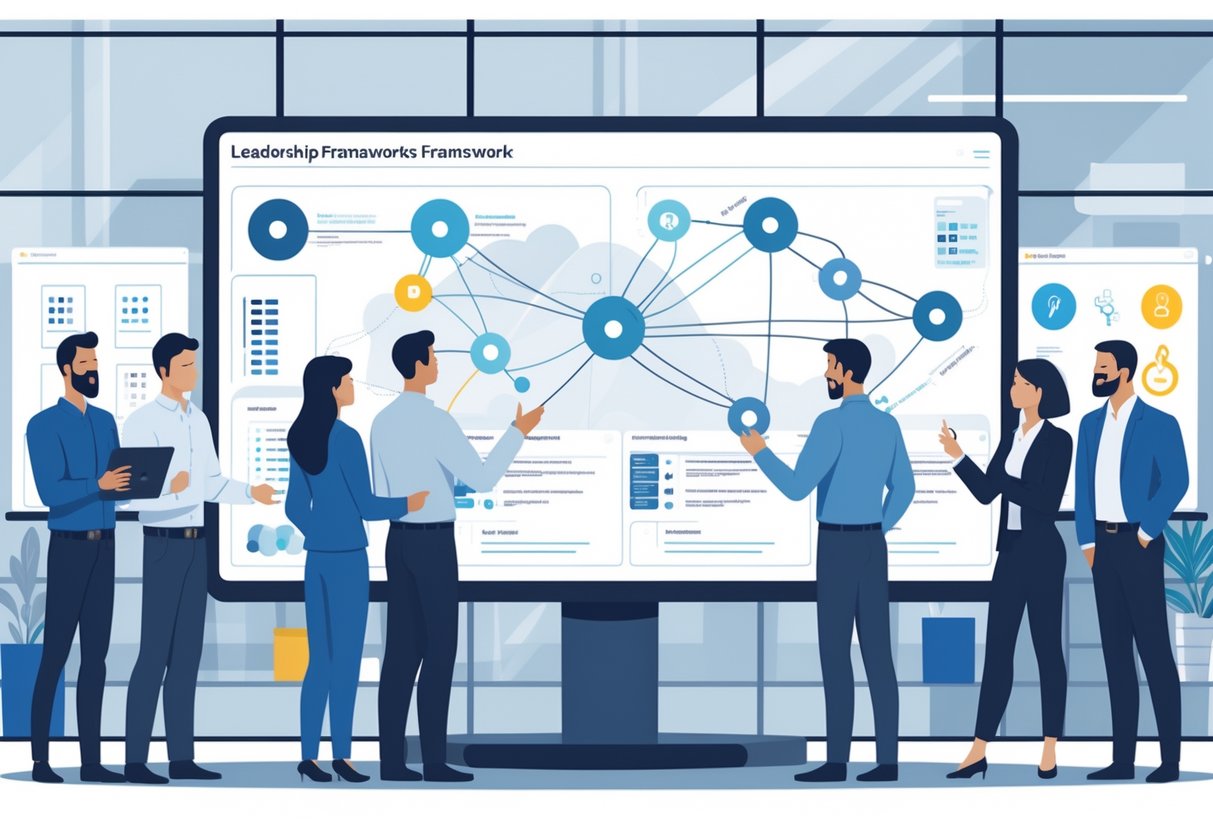
Technical leaders need structured approaches to manage complex projects and align distributed teams. The right frameworks reduce coordination overhead, accelerate delivery cycles, and create predictable execution patterns across engineering organizations.
Agile Methodologies in Technical Teams
Agile methodologies provide the foundation for iterative development in modern technical organizations. Scrum remains the most widely adopted framework, with two-week sprints that create natural checkpoints for code review, integration testing, and stakeholder feedback. Teams use daily standups to surface blockers early and maintain sprint velocity through visible burndown charts.
Kanban offers a leaner alternative for platform teams and DevOps groups handling continuous work streams rather than discrete features. The framework limits work-in-progress to prevent context switching and uses cycle time metrics to identify process bottlenecks. Many organizations blend both approaches, using Scrum for product development while applying Kanban to infrastructure and support work.
The most effective technical teams customize Agile frameworks based on their deployment frequency and system architecture. Microservices architectures enable true continuous delivery, while monolithic codebases often require longer integration cycles. Leaders should match sprint length to their CI/CD maturity and adjust retrospective frequency based on team size and coordination complexity.
Effective Project Management Approaches
Technical project management requires clear accountability structures that prevent ambiguity in fast-moving engineering environments. The RACI matrix defines who is Responsible for execution, Accountable for outcomes, Consulted for input, and Informed of progress. This framework proves particularly valuable during platform migrations and API redesigns where multiple teams touch shared systems.
Waterfall methodology still applies to hardware development, regulatory compliance work, and fixed-scope contracts where requirements remain stable. Technical leaders use critical path analysis to identify dependencies and allocate resources to bottleneck activities. The approach fails when requirements shift mid-project or when customer feedback demands rapid iteration.
High-performing organizations implement team health checks at sprint boundaries to monitor workload balance, psychological safety, and decision-making effectiveness. These assessments reveal process debt before it impacts delivery schedules or team retention.
Cross-Functional Collaboration Models
Cross-functional collaboration frameworks enable technical leaders to coordinate between engineering, product, design, and data science teams. The framework defines communication protocols, decision rights, and integration points that prevent duplicate work and conflicting priorities.
Successful models establish embedded partnerships where product managers sit with engineering squads and participate in technical design reviews. This pattern reduces requirement churn and accelerates trade-off decisions during implementation. Data scientists join sprint planning to ensure ML models integrate cleanly with production systems rather than requiring extensive refactoring.
Technical leaders build collaboration systems that scale with organizational complexity. Small teams operate effectively with informal touchpoints, while organizations above 50 engineers require structured interface contracts between platform and feature teams. The best frameworks include explicit escalation paths for architectural disagreements and capacity conflicts that block progress across team boundaries.
Mentoring, Diversity, and Inclusion in Technical Leadership
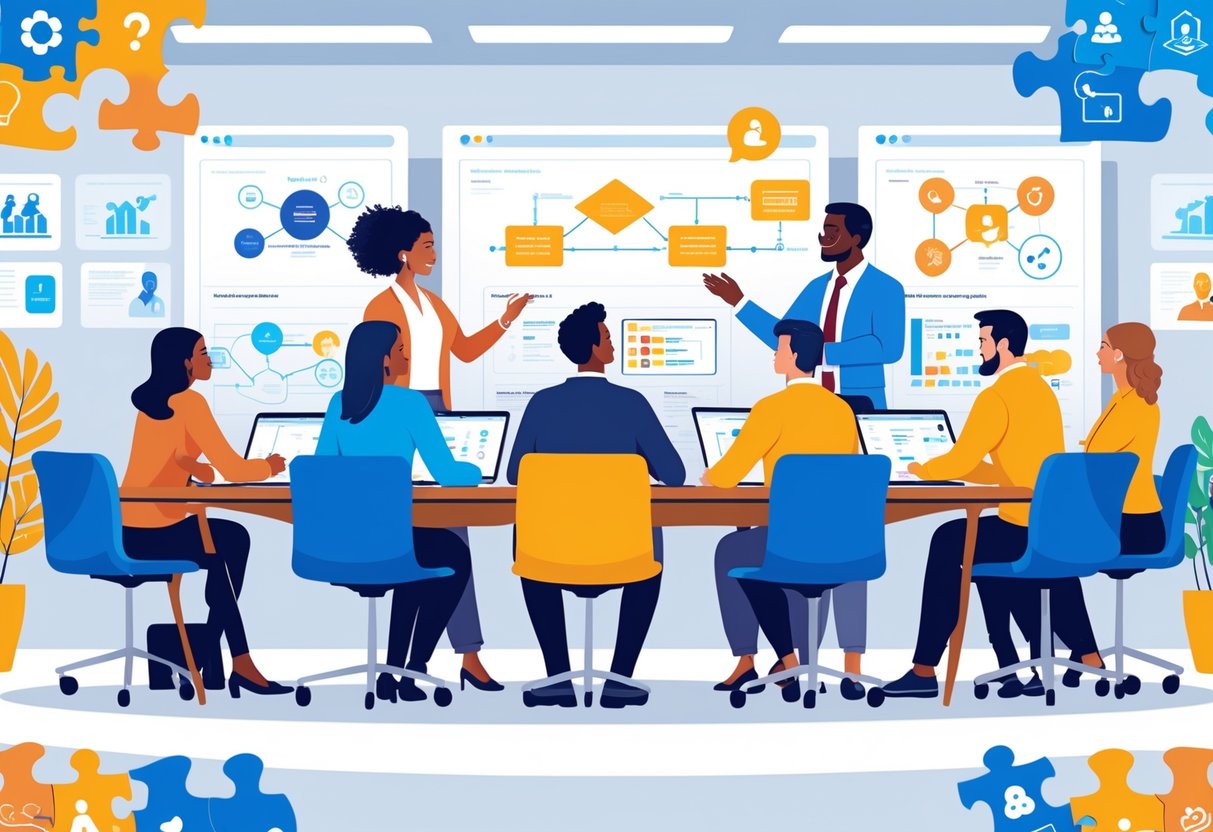
Technical leaders who build effective mentorship programs and embed diversity principles create stronger teams that deliver better engineering outcomes. Remote and hybrid work models require deliberate frameworks to maintain these cultural pillars while distributed teams scale.
Mentorship Frameworks for Technical Talent
Technical leaders need structured mentorship programs that focus on skill transfer and career progression. The most effective frameworks pair junior engineers with senior technical staff for regular code reviews, architecture discussions, and system design sessions.
Technical leadership and mentorship in software development shows that mentorship practices directly impact team performance and innovation output. Leaders should establish clear meeting cadences, set specific learning objectives, and track progress through quantifiable metrics like pull request quality, design document contributions, and incident response capabilities.
Peer mentoring works particularly well for mid-level engineers. These relationships help engineers develop leadership skills while maintaining technical depth. Leaders can facilitate these connections through pairing programs, internal tech talks, and cross-team project assignments.
Digital platforms enable asynchronous mentorship at scale. Leaders use tools like Slack channels, internal wikis, and recorded architecture reviews to share knowledge beyond one-on-one sessions. This approach helps distributed teams access expertise regardless of time zones or work schedules.
Embedding Diversity and Inclusion Principles
Diversity in technical teams requires intentional hiring practices and inclusive leadership behaviors. Leaders must evaluate candidates from non-traditional backgrounds, expand recruiting pipelines beyond elite universities, and structure interviews to assess problem-solving ability over memorized algorithms.
Inclusive leadership frameworks create conditions where team members contribute without hiding their identities. Technical leaders demonstrate this through equitable speaking time in meetings, varied communication channels that accommodate different working styles, and decision-making processes that incorporate diverse perspectives.
Mentorship supports diversity and inclusion by connecting underrepresented engineers with leaders who have navigated similar challenges. These relationships provide guidance on technical growth, organizational dynamics, and career advancement strategies that might not be obvious to someone from a non-traditional background.
Leaders should track diversity metrics across levels, promotion rates, and retention data. This quantitative approach identifies gaps in advancement opportunities and helps leaders adjust their practices before talent leaves the organization.
Building Remote and Hybrid Teams
Remote work requires technical leaders to redesign how teams collaborate, share knowledge, and maintain culture. The shift to distributed work exposed gaps in many organizations' mentorship and inclusion practices.
Leaders must establish clear communication protocols that prevent information silos. This includes documented decision-making processes, recorded meetings with searchable transcripts, and centralized technical documentation that all team members can access regardless of location.
Hybrid models present unique challenges where in-office employees gain informal advantages through hallway conversations and impromptu discussions. Technical leaders counter this by scheduling dedicated virtual office hours, rotating meeting times to accommodate different time zones, and using digital platforms for all major technical decisions rather than relying on in-person gatherings.
Building inclusive tech teams through mentorship becomes more critical in remote environments where junior engineers lack organic learning opportunities. Leaders structure virtual pair programming sessions, create dedicated Slack channels for questions, and host regular architecture reviews that welcome participation from all experience levels.
Remote teams benefit from explicit career development frameworks. Leaders should provide clear technical ladders, regular feedback cycles, and transparent promotion criteria that don't favor office presence over output quality.
Risk Management and Cybersecurity Leadership

Technical leaders must balance security investments against product velocity while building systems that withstand evolving threats. This requires structured approaches to evaluate organizational vulnerabilities and embed protective measures directly into engineering workflows.
Assessing and Mitigating Technological Risks
Risk assessment and prioritization starts with mapping attack surfaces across the technology stack. Leaders conduct threat modeling sessions during architecture reviews, identifying where customer data flows, which services lack authentication layers, and where legacy systems create exposure. They quantify risks using probability-impact matrices that translate technical vulnerabilities into business terms executives understand.
Effective risk management means establishing clear ownership. Technical leaders assign specific engineers or teams to remediate high-priority vulnerabilities within defined timeframes. They track metrics like mean time to patch critical dependencies and percentage of systems with current security updates.
The best leaders implement automated scanning in CI/CD pipelines to catch vulnerabilities before production deployment. They use tools like Snyk or Dependabot to monitor third-party libraries and establish policies requiring approval for packages with known security issues. This approach shifts security left in the software development lifecycle rather than treating it as a final gate.
Integrating Cybersecurity Practices
Strategic leadership in cybersecurity requires embedding security into daily engineering practices. Technical leaders institute secure coding standards, mandate code reviews focused on security patterns, and run regular tabletop exercises simulating breach scenarios. They ensure developers understand OWASP top ten vulnerabilities and how architectural decisions affect the organization's security posture.
Integration works best when leaders build security champions within engineering teams. These designated engineers receive additional training and serve as first-line reviewers for security-sensitive changes. They help teammates understand threat models without creating bottlenecks that slow development.
Management skills come into play when balancing security requirements against delivery timelines. Leaders establish security budgets as percentages of engineering capacity and make trade-offs transparent. They communicate which risks the organization accepts versus mitigates, documenting decisions that defer security work in favor of market opportunities. This clarity prevents security debt from accumulating invisibly until it becomes a crisis.
Wake Up Your Tech Knowledge
Join 40,000 others and get Codeinated in 5 minutes. The free weekly email that wakes up your tech knowledge. Five minutes. Every week. No drowsiness. Five minutes. No drowsiness.