Tech Lead Responsibilities: Systems-Level Insight for Teams That Win
Understand tech lead responsibilities. Learn how to balance coding, mentoring, and technical decision-making in a tech lead role.
Posted by
 Joseph Kaplan
Related reading
Decision Making for Engineers: Gain Strategic Systems Insight Now
Develop decision-making frameworks for engineers. Learn how to evaluate trade-offs, manage uncertainty, and make high-impact technical decisions.
Engineering Leadership in Budget-Constrained Environments [Don't Miss These Key Tactics!]
Lead engineering teams with limited budgets. Learn strategies for maximizing impact, prioritizing investments, and delivering value with constraints.
Engineering Leadership: Systems-Level Strategies to Win in Tech
Master the essential skills and frameworks for engineering leadership. Learn how to balance technical depth with team development, make strategic decisions, and drive business impact.
Core Tech Lead Responsibilities
A technical lead manages both hands-on technical work and leadership duties that directly affect project outcomes. They make architectural choices that shape system performance, guide teams through complex technical problems, and ensure delivery goals align with business needs.
Technical Guidance and Decision-Making
The technical lead establishes the architectural foundation that determines system scalability, maintainability, and cost efficiency. They select frameworks, databases, and infrastructure patterns based on specific performance requirements and team capabilities. This means evaluating trade-offs between build-versus-buy decisions, assessing when to adopt new technologies, and determining which technical debt to address immediately versus later.
Technical leadership involves making design decisions and setting coding standards through active code reviews. The technical lead reviews pull requests to catch issues before they compound into larger problems. They identify when abstractions add value versus when they create unnecessary complexity.
Strong technical leads document architectural decisions with clear reasoning. They create runbooks for common scenarios and maintain technical specifications that help team members understand system behavior. This documentation prevents knowledge silos and reduces onboarding time for new engineers.
Project Delivery Oversight
The technical lead role requires breaking down large features into tasks that engineers can complete within a sprint cycle. They work with the team to estimate effort accurately by considering technical complexity, dependencies, and potential blockers. These estimates inform realistic timelines that the project manager uses for scheduling.
A technical lead identifies risks early by analyzing requirements for unclear specifications, missing dependencies, or integration challenges. They surface these concerns to stakeholders before they delay project delivery. When bottlenecks emerge, they reassign work or adjust scope to keep the team moving forward.
They balance technical excellence with shipping velocity. This means knowing when to refactor code for long-term maintainability versus when to accept temporary solutions that meet immediate project goals. Top teams track metrics like deployment frequency, lead time for changes, and mean time to recovery to measure their delivery effectiveness objectively.
Stakeholder Communication
A technical lead translates complex technical concepts into clear explanations for product managers, designers, and executives. They explain why certain features require more time than expected or how technical constraints affect product roadmaps. This communication prevents misaligned expectations that derail software development projects.
They participate in planning meetings to provide technical direction that shapes feature prioritization. When stakeholders request features that would require significant architectural changes, the technical lead presents options with cost and timeline implications. This allows leadership to make informed decisions about resource allocation.
The technical lead also communicates upward about team capacity, technical debt levels, and infrastructure needs. They advocate for investments in tooling, testing frameworks, or refactoring efforts that improve long-term velocity even when these don't deliver immediate user-facing features.
Risk Management
Identifying and mitigating technical issues before they escalate represents a core responsibility. The technical lead monitors system performance metrics, error rates, and security vulnerabilities to catch problems early. They establish monitoring and alerting systems that surface issues automatically rather than waiting for user reports.
They assess how architectural decisions affect failure modes and recovery strategies. This includes planning for database failures, API outages, or traffic spikes that could overwhelm systems. Smart technical leads run failure simulations to test recovery procedures before incidents occur.
The technical lead also manages dependencies on external teams or third-party services that could block progress. They maintain backup plans when critical dependencies face delays. For teams navigating these complex trade-offs, understanding how senior engineering leaders structure these decision-making frameworks provides valuable context for advancing technical leadership capabilities.
Leadership and Team Management
Wake Up Your Tech Knowledge
Join 40,000 others and get Codeinated in 5 minutes. The free weekly email that wakes up your tech knowledge. Five minutes. Every week. No drowsiness. Five minutes. No drowsiness.
A tech lead balances hands-on technical work with people leadership, requiring strong interpersonal skills to guide developers while maintaining code quality. They supervise daily work, resolve interpersonal conflicts, and conduct structured performance evaluations to keep teams productive and aligned with business objectives.
Team Supervision
A tech lead oversees the daily activities of software developers by reviewing their code submissions, unblocking technical obstacles, and ensuring work stays aligned with architectural decisions. They monitor pull requests to catch issues early, checking that implementations follow established patterns and don't introduce technical debt. This supervision extends beyond code quality to include task allocation based on each developer's skill level and capacity.
Effective supervision practices include:
- Daily stand-up meetings to identify blockers and reassign work when needed
- Pairing junior developers with senior engineers for complex features
- Tracking velocity metrics to spot bottlenecks in the development pipeline
- Maintaining visibility into each team member's workload to prevent burnout
The tech lead adjusts their supervision style based on individual needs. Experienced engineers require less oversight and benefit from autonomy, while newer team members need more frequent check-ins and guidance. They facilitate knowledge-sharing sessions where team members present solutions to technical challenges, building collective expertise across the group.
Conflict Resolution Strategies
Technical disagreements about architecture choices, code standards, or implementation approaches arise frequently in development teams. A tech lead addresses these conflicts by facilitating discussions where each side presents their reasoning with specific examples and performance data. They evaluate trade-offs objectively, considering factors like maintainability, scalability, and delivery timelines rather than personal preferences.
When interpersonal tensions emerge between team members, the tech lead intervenes early before productivity suffers. They schedule private conversations to understand each perspective, then bring parties together to establish shared expectations. For recurring conflicts about code review feedback, they document specific standards that remove subjectivity from future discussions.
Resolution tactics include:
- Creating decision matrices that compare technical options across measurable criteria
- Establishing team agreements on contentious practices through democratic voting
- Escalating people-management issues to engineering managers when appropriate
- Building psychological safety so developers voice concerns before they escalate
Goal Setting and Performance Reviews
A tech lead participates in performance reviews by providing technical assessments of each developer's contributions, code quality, and growth trajectory. They document specific examples throughout the review period, noting both achievements like successful feature launches and areas needing improvement such as testing practices or documentation habits. These evaluations feed into compensation decisions and promotion discussions managed by engineering managers.
They set quarterly technical goals with each team member that align individual development with project needs. A junior engineer might focus on mastering the testing framework, while a senior developer works on reducing database query latency by 30%. The tech lead tracks progress through regular one-on-ones, adjusting goals when priorities shift or obstacles emerge.
Performance discussions address both technical execution and team collaboration skills, since software delivery depends on effective communication. They provide constructive feedback on how developers explain technical concepts, respond to code review comments, and contribute to design discussions. This mentorship helps engineers build the soft skills required for career advancement into senior technical roles.
Technical Expertise and Skills
A tech lead must maintain deep technical knowledge across architecture, programming, and quality assurance practices. These skills enable them to make sound decisions that affect system performance, team productivity, and long-term maintainability.
System Architecture
A tech lead evaluates system architecture decisions by weighing scalability requirements against current team capabilities and infrastructure costs. They choose between monolithic and microservices patterns based on deployment complexity, team size, and anticipated traffic patterns.
High-performing tech leads assess database selection through specific metrics: read-write ratios, consistency requirements, and query patterns. They determine when to introduce caching layers by measuring actual response times and identifying bottlenecks through profiling tools. When selecting message queues or event streaming platforms, they compare throughput capabilities, persistence guarantees, and operational overhead.
They document architectural decisions with clear reasoning about trade-offs. This includes noting why certain approaches were rejected and under what conditions those decisions should be revisited. Teams that track these decisions avoid repeating past mistakes and reduce technical debt accumulation.
Programming Languages and Best Practices
Tech leads maintain proficiency in the core programming languages their teams use daily. They understand language-specific patterns, performance characteristics, and common pitfalls that trip up less experienced developers.
They establish coding standards that address real issues: naming conventions that improve searchability, error handling patterns that prevent silent failures, and logging practices that enable debugging in production. Best practices include defining dependency injection patterns, establishing module boundaries, and setting rules for external library adoption.
Strong tech leads evaluate new language features by testing them in non-critical code paths first. They measure the impact on build times, runtime performance, and team learning curves before broader adoption. They also maintain awareness of security vulnerabilities in dependencies and establish update policies that balance stability with patch urgency.
Code Reviews and Testing
Code reviews serve as teaching opportunities and quality gates. Tech leads check for logic errors, security vulnerabilities, and maintainability issues rather than just style violations. They verify that new code includes appropriate error handling, considers edge cases, and doesn't introduce performance regressions.
They set testing standards based on code criticality: payment processing requires higher coverage than internal admin tools. Tech leads define which types of tests belong at each level - unit tests for business logic, integration tests for external dependencies, and end-to-end tests for critical user paths.
Tech leads establish automation that blocks merges when tests fail or coverage drops below thresholds. They configure static analysis tools to catch common bugs and enforce complexity limits. These practices catch issues before they reach production and reduce the burden on human reviewers.
Software Development Lifecycle Responsibilities
Wake Up Your Tech Knowledge
Join 40,000 others and get Codeinated in 5 minutes. The free weekly email that wakes up your tech knowledge. Five minutes. Every week. No drowsiness. Five minutes. No drowsiness.

A tech lead shapes every phase of the SDLC, from initial architecture decisions through production monitoring. They make technical choices that affect deployment speed, system reliability, and long-term maintenance costs while ensuring security standards are met at each stage.
Designing and Implementation
The tech lead defines system architecture during the software development life cycle design phase, selecting frameworks, databases, and integration patterns that align with performance requirements and team capabilities. They evaluate whether microservices or monolithic architectures better serve the product roadmap, considering deployment complexity and operational overhead. High-performing teams benchmark multiple solutions before committing, running proof-of-concept implementations to validate latency, throughput, and developer experience.
During implementation, the tech lead establishes code quality gates and review processes. They work directly with software engineers to break down features into testable units, ensuring each component can be validated independently. Pair programming sessions and architecture reviews prevent technical debt from accumulating in critical paths.
The tech lead coordinates with testers to define integration test strategies early. They ensure APIs are designed with testability in mind, creating clear contracts between services. This collaboration reduces the time between feature completion and production readiness.
Deployment and Maintenance
A tech lead designs deployment pipelines that minimize risk and enable rapid rollbacks. They work with DevOps teams to implement continuous integration and continuous deployment practices, choosing between blue-green deployments, canary releases, or feature flags based on system requirements. Elite teams automate environment provisioning and configuration management to eliminate deployment inconsistencies.
The tech lead establishes monitoring and observability frameworks before features reach production. They define key performance indicators, error budgets, and alert thresholds that surface issues before users are affected. This includes structured logging, distributed tracing, and metrics collection across the entire stack.
For maintenance, the tech lead prioritizes technical debt based on system impact. They schedule refactoring work alongside feature development, preventing legacy code from slowing future changes. They also plan capacity scaling, evaluating when to optimize existing systems versus adding infrastructure.
Security Audits and Compliance
The tech lead integrates security practices throughout the SDLC rather than treating audits as final checkpoints. They implement static code analysis tools, dependency scanning, and automated vulnerability testing in CI/CD pipelines. Security becomes a continuous verification process rather than a gate before release.
They ensure authentication, authorization, and data encryption standards are established during design phases. The tech lead works with security teams to conduct threat modeling sessions for new features, identifying attack vectors and mitigation strategies before implementation begins.
For compliance requirements, the tech lead documents architectural decisions and data flow patterns that auditors need to verify. They establish audit logging for sensitive operations and ensure systems maintain compliance evidence automatically. This proactive approach reduces the time required for formal security audits and prevents last-minute architectural changes.
Project Management and Methodologies
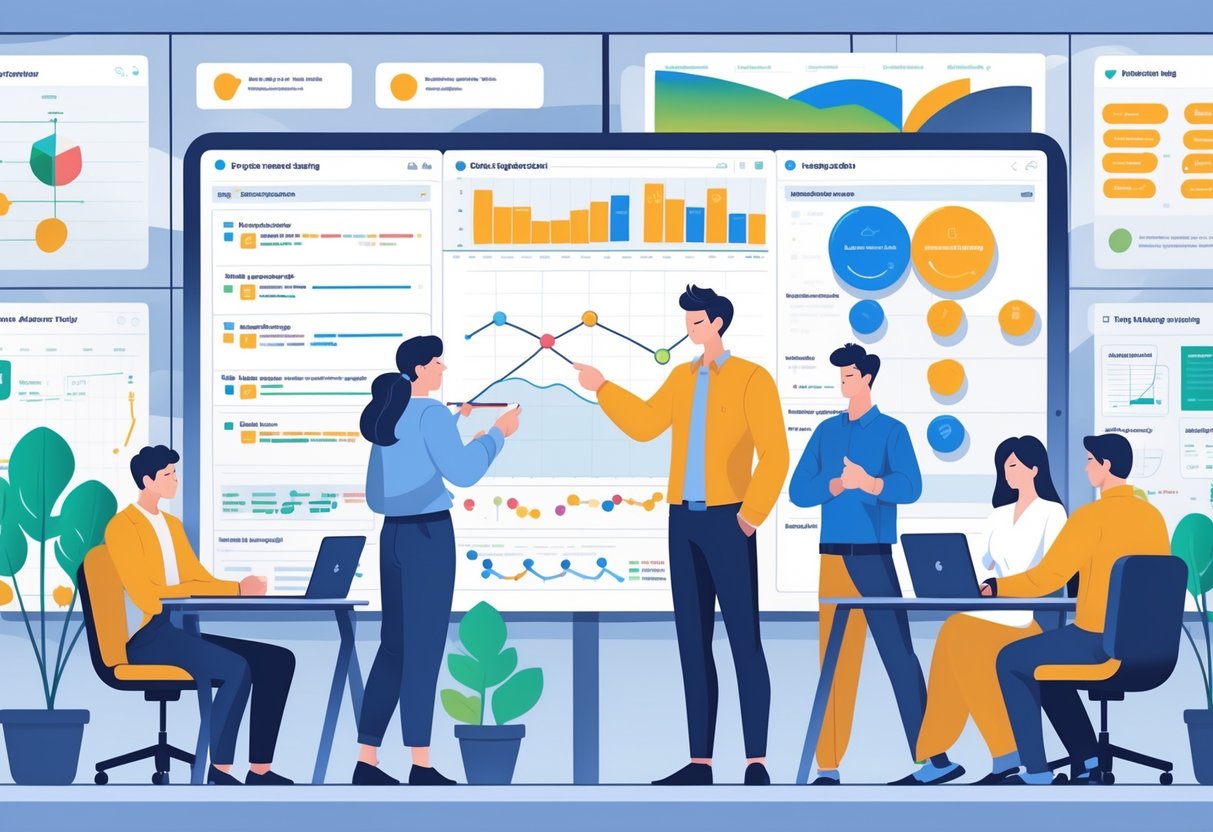
Tech leads balance technical decisions with project coordination, breaking down features into actionable tasks and managing delivery timelines. They apply software development methodologies like Agile or Scrum to guide teams through development cycles while maintaining technical quality.
Project Planning and Execution
A tech lead translates business requirements into technical specifications and manageable tasks for the team. They work with developers to estimate effort for each task, which creates realistic timelines and helps identify potential risks early in the development cycle. This estimation process requires deep technical knowledge to account for dependencies, infrastructure constraints, and integration complexity.
Key planning activities include:
- Breaking down large features into smaller, deployable increments
- Prioritizing work based on technical dependencies and business value
- Identifying architecture decisions that block or enable parallel development
- Establishing quality gates and code review checkpoints
Tech leads bridge the gap between development teams and stakeholders like product owners and UX designers. They communicate technical constraints clearly to non-technical audiences while protecting the team from scope changes that threaten delivery goals. Managing these responsibilities keeps the development process efficient and leads to timely delivery of quality software.
Adapting Software Development Methodologies
Tech leads modify Agile or Scrum practices to fit their team's technical reality rather than following frameworks blindly. They adjust sprint lengths based on deployment complexity, testing requirements, and integration cycles. A team building microservices might need different ceremony structures than one maintaining a monolithic application.
The tech lead decides which aspects of a methodology serve the project and which create unnecessary overhead. They might skip daily standups for a highly autonomous senior team while adding architecture reviews for projects with high technical risk. This requires evaluating trade-offs between process structure and team velocity.
Successful tech leads track how methodology changes affect delivery metrics and code quality. They measure cycle time, defect rates, and deployment frequency to validate their approach. When processes slow the team down, they remove barriers quickly instead of waiting for formal retrospectives.
Recruitment and Talent Development

Tech leads shape their team's capabilities through targeted recruitment and structured training programs. They evaluate technical skills during hiring and build mentorship frameworks that accelerate developer growth while maintaining code quality standards.
Recruitment Process and Onboarding
A tech lead assesses technical competencies during interviews by evaluating candidates on system design problems, code reviews, and architectural trade-offs. They look beyond surface-level coding skills to identify engineers who understand performance bottlenecks, scalability patterns, and operational concerns.
The recruitment process involves defining role requirements with specific technologies and experience levels. Tech leads create technical assessments that reveal how candidates approach unfamiliar problems and communicate complex decisions. They prioritize engineers who demonstrate debugging skills and the ability to work within existing codebases.
During onboarding, tech leads establish clear expectations around coding standards, deployment procedures, and team communication protocols. They assign initial tasks that expose new hires to critical system components without overwhelming them. The first two weeks typically include pair programming sessions, architecture walkthroughs, and access to internal documentation that explains key technical decisions.
Continuous Training and Mentorship
Tech leads implement structured mentorship programs that pair junior developers with senior team members for regular code reviews and technical discussions. They schedule weekly one-on-one sessions to address skill gaps and provide feedback on recent work. These sessions focus on concrete improvements rather than vague encouragement.
Goal setting in mentorship involves identifying specific technical competencies each developer needs to advance. A tech lead might set quarterly goals around mastering a new framework, improving test coverage practices, or leading a feature implementation. They track progress through measurable outcomes like successful project deliveries and reduced bug rates.
Training extends to tool updates and emerging technologies that affect the team's work. Tech leads organize internal workshops when adopting new infrastructure tools or refactoring patterns. They ensure developers understand why certain architectural decisions were made and how those choices impact system behavior under production load.
Career Growth and Strategic Impact

The tech lead position serves as a critical stepping stone toward executive roles while delivering measurable influence on product direction and engineering culture. Compensation reflects this strategic value, and the distinction between tech leads and engineering managers shapes how organizations scale technical decision-making.
Tech Lead vs. Engineering Manager
Tech leads and engineering managers operate in complementary but distinct domains within software development teams. A tech lead focuses primarily on technical execution, architecture decisions, and ensuring the engineering approach aligns with product requirements. They review code, select frameworks, and guide the technical team through implementation challenges.
An engineering manager concentrates on people leadership, including performance reviews, career development, and team dynamics. They handle hiring, facilitate cross-functional communication with product owners, and remove organizational blockers. Many companies separate these roles to allow specialists to excel in either technical strategy or people management.
Some technical leads transition to engineering manager positions, while others advance toward CTO roles by deepening their technical leadership. The choice depends on whether someone prefers shaping systems and technology decisions or building teams and managing individual contributors.
Technical Lead Salary and Market Trends
Technical lead salary ranges typically fall between senior software engineer and engineering manager compensation. In major tech markets, base salaries range from $140,000 to $200,000, with total compensation reaching $180,000 to $280,000 when including equity and bonuses.
Salary variation depends on company size, funding stage, and technical scope. Technical leads at enterprise companies often earn more than those at early-stage startups, though equity compensation can close this gap. Leaders who demonstrate impact on system performance, deployment velocity, or infrastructure cost reduction command premium compensation.
Market demand remains strong for technical leads who combine hands-on expertise with the ability to translate business requirements into technical roadmaps. Organizations increasingly value leaders who can evaluate AI integration strategies, optimize cloud architecture costs, and reduce technical debt while maintaining feature velocity.
Innovation and Organizational Influence
Technical leads drive innovation by identifying opportunities where new technologies deliver measurable business value. They evaluate emerging tools, assess architectural patterns, and determine when adopting new approaches improves development speed or product capabilities.
The most effective technical leads establish frameworks for technical decision-making that persist beyond individual projects. They create RFC processes, define service ownership models, and build internal platforms that accelerate the entire software development team. This systematic approach to technical leadership responsibilities multiplies their impact across the organization.
Strong technical leads also shape product direction by working closely with product owners to identify technical constraints and opportunities early. They surface implementation risks before commitments are made and propose technical capabilities that unlock new product features. This partnership ensures engineering investments align with business priorities while maintaining technical excellence.
Wake Up Your Tech Knowledge
Join 40,000 others and get Codeinated in 5 minutes. The free weekly email that wakes up your tech knowledge. Five minutes. Every week. No drowsiness. Five minutes. No drowsiness.