Get Codeinated ☕
Join 40,000 others and get Codeinated in 5 minutes. The free weekly email that wakes up your tech knowledge. Five minutes. Every week. No drowsiness.
In partnership with

☕ Morning! 💡 Your Weekly 5-Minutes of Caffeine and Tech Clarity
Quick Hits 🎯
-
🔐 AI hacking is no longer a nerd problem. It's a business continuity risk, and most companies are treating it like a footnote
-
🌊 Claude updated. Then everything downstream broke. The blast radius problem in agentic AI is real, and most orgs have no playbook for it
-
💰 Alphabet just raised $85B for its AI business, the largest institutional bet in tech history signals where the next decade's value compounds
-
🧠 Chatbots might be rewiring how you think. MIT researchers find measurable changes in decision velocity and error patterns among heavy AI users
-
📦 Outsourcing's economics just flipped. AI-enabled delivery is making cheap labor the wrong variable to optimize for
-
🤝 "Together tech" is the contrarian startup bet of 2026. Human-first, experiential, and deliberately un-automated
-
✂️ GitLab cut 14% of staff as it scales AI workloads. The lean-platform playbook is spreading fast
-
🤖 Agentic AI solved coding and immediately exposed everything else. Requirements, integration, maintenance: still completely manual
🎁 + 3 other stories you might find useful
Our Partner 🎉
Fast browsing. Faster thinking.
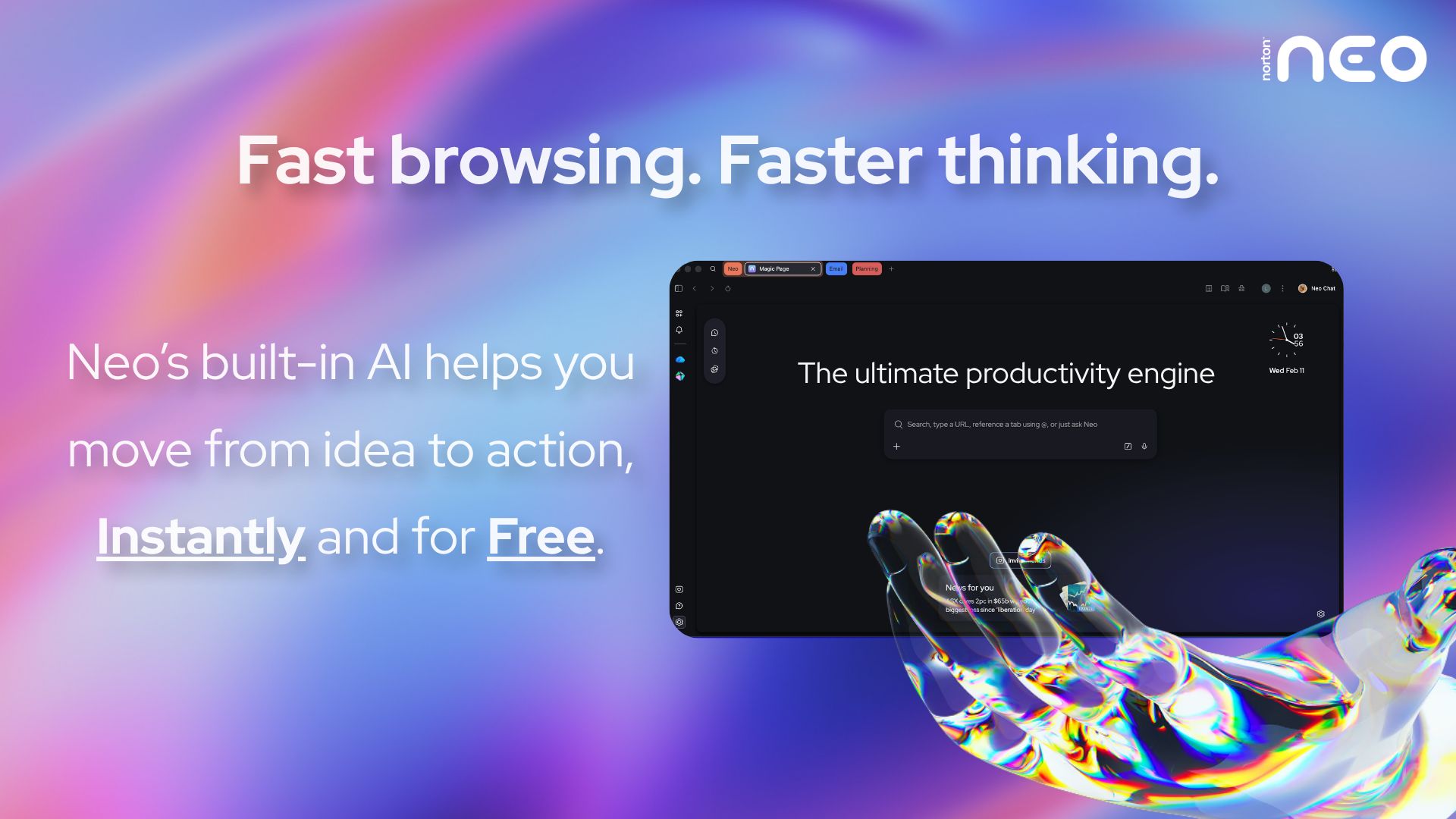
Your browser gets you to a page. Norton Neo gets you to the answer. The first safe AI-native browser built by Norton moves with you from idea to action without slowing you down. Magic Box understands your intent before you finish typing. AI that works inside your flow, not beside it. No prompting. No copy-pasting. No switching apps.
Built-in AI, instantly and for free. Privacy handled by Norton. Built-in VPN and ad blocking protect you by default. No configuration. No extra apps. Nothing to think about.
Fast. Safe. Intelligent. That's Neo.
The Big Picture 🖼️
💡 Production AI Has a Discipline Problem - Not a Technology Problem.
Three hundred and forty silent failures. That's what one team logged before a monitoring alert fired all because a model update shifted output formatting enough to break a downstream parser that nobody thought to watch.
The post-mortem reads like every distributed systems war story you've ever heard, except the root cause isn't a race condition or a memory leak.
It's an assumption: that AI components behave like software dependencies. They don't. They're probabilistic, vendor-controlled, and can change without a version bump.
The takeaway: The teams not dealing with this yet aren't lucky. They just haven't hit their 340th silent failure.
💡 Google Isn't Raising $85B to Win a Feature War.
Features are table stakes. What $85B actually buys is time compression. The ability to make 5 years of infrastructure decisions in 18 months, before competitors can respond and before enterprises finish evaluating alternatives.
By the time your procurement team finishes a vendor comparison, the migration cost from Google's stack will have tripled. That's not a conspiracy, it's the oldest playbook in enterprise software, now running at AI speed.
The companies feeling this most aren't startups. They're mid-market firms that signed 3-year GCP agreements thinking they were buying flexibility. They weren't. They were buying lock-in with a grace period.
Takeaway: Start your data portability conversation now. Six months from now, it gets more expensive to have.
💡 Your Security Model Has a Gap Shaped Exactly Like Your AI Stack.
The pattern surfacing in MIT Technology Review's latest analysis of AI hacking isn't theoretical. Prompt injection is being used to exfiltrate context from RAG pipelines.
Adversarial inputs are manipulating outputs in ways that don't trigger traditional anomaly detection. And none of it looks like a breach until after the damage is done.
The attack surface isn't the model. It's the trust relationship between your application and whatever the model returns. Most security audits don't have a framework for that yet.
The takeaway: If your threat model was written before your AI stack existed, your threat model is wrong.
💡 Outsourcing's Dominant Logic Collapsed. Most Contracts Haven't Caught Up.
Cost arbitrage was the entire argument for offshore delivery for three decades. HBR's analysis documents what procurement teams are quietly discovering: AI-native boutiques with 8 to 12 people are consistently outperforming legacy delivery centers with 400-person benches on speed, quality, and price.
The incumbents are responding the way incumbents always respond: racing to add AI capabilities to a cost structure that was built for a different economic model. Some will make it. Most won't restructure fast enough.
If you're renewing an outsourcing contract this year, the single most valuable question you can ask is: show me your cost-per-outcome trend over the last four quarters. The answer will tell you everything.
The takeaway: You're not renewing a vendor contract. You're deciding whether to inherit someone else's technical debt.
💡 GitLab Just Gave Every Engineering Leader Permission to Have a Hard Conversation.
The announcement cut 14% of headcount in the same breath as reporting AI workload growth. That's not a contradiction, it's the business model of an AI-native platform working exactly as designed. More throughput, fewer humans in the loop.
Most engineering leaders are running the same internal calculation and arriving at the same answer. Very few are saying it. GitLab said it. The companies that respond with denial are going to spend the next 18 months being disrupted by the ones that responded with a plan.
The conversation worth having: where in your team's workflow is human effort not creating human value? That's where the restructuring starts - whether you initiate it or not.
The takeaway: GitLab didn't create this pressure. It just stopped pretending it isn't there.
💡 Agentic Coding Didn't Break Software Engineering. It Stress-Tested It.
The teams struggling with agentic AI tools aren't struggling because the tools don't work. They're struggling because their architecture review process was already the bottleneck. It's just invisible when PRs arrive at human speed.
Triple the code throughput and every weakness in your engineering process becomes a queue. Vague tickets. Missing acceptance criteria. Reviewers who can't keep up. Integration environments that weren't built for this volume.
The teams running agentic tools effectively didn't build better AI workflows first. They fixed their upstream process like requirements, architecture, review first and then dropped in the tools. That sequence matters.
The takeaway: Agentic AI doesn't reward fast teams. It rewards tight teams.
💡 The Chatbot Dependency Problem Has a Job Title.
The MIT Technology Review study doesn't read as a warning about AI being harmful. It reads as a warning about a specific usage pattern: offloading judgment on questions that benefit from being wrestled with.
The people compounding this fastest aren't interns. They're mid-level professionals 2 to 5 years in - experienced enough to have complex problems, senior enough to have AI access, early enough in their career that the habit is still forming.
Engineering managers: your 1:1 agenda has a new permanent item. Not "are you using AI?" but "show me a decision you made this week that you actually thought through yourself."
The takeaway: Cognitive atrophy doesn't announce itself. It shows up in the quality of decisions six months from now.
💡 Satya Nadella Told You Exactly What Microsoft Isn't Building. Nobody Wrote About That Part.
The Stratechery interview ran 90 minutes. The headlines all focused on Copilot and Azure AI momentum, because that's the easy read.
Get Codeinated ☕
Join 40,000 others and get Codeinated in 5 minutes. The free weekly email that wakes up your tech knowledge. Five minutes. Every week. No drowsiness.
The harder read is the list of adjacencies Nadella explicitly walked away from - product categories where Microsoft had the distribution and the budget to compete, and chose not to. In a market where FOMO is driving half the roadmap decisions at most companies, that kind of strategic restraint is worth studying frame by frame.
What you're not building defines you as much as what you are. Most product orgs haven't internalized that. Nadella has.
The takeaway: Roadmap discipline is saying no to things you could build. That's harder than it sounds when every competitor is announcing something new every two weeks.
💡 "Together Tech" Is the Trade You Make When You Believe AI Will Win.
This sounds counterintuitive until it doesn't. The TechCrunch breakdown of the together tech wave maps a cluster of startups operating from a single shared premise: that widespread AI automation will make physical presence, shared experience, and genuine human community dramatically scarcer and therefore dramatically more valuable.
They're not anti-AI. Most of them use AI heavily in their products. They're just betting on the demand curve for things that can't be replicated by a model, at exactly the moment when everyone else is betting on the things that can.
The takeaway: The contrarian bet isn't against AI. It's on the premium that scarcity creates when AI makes everything else abundant.
Trending Tools 📈
openai/whisper (+327 ⭐ per day, 🟪 Python) Link
-
Local, offline speech recognition across 99 languages. No API key, no cost per minute, no data leaving your infrastructure
-
Why it's trending: teams with compliance constraints are replacing paid ASR APIs; the accuracy gap closed two model versions ago
yt-dlp/yt-dlp (+343 ⭐ per day, 🟪 Python) Link
-
Programmatic audio/video acquisition from 1,000+ sources with format control and metadata extraction baked in
-
Why it's trending: media and research pipelines are consolidating around it; actively maintained unlike every alternative
sveltejs/svelte (+248 ⭐ per day, 🟨 JavaScript) Link
-
Compiles to vanilla JS at build time - no virtual DOM overhead, smaller bundles, less runtime complexity
-
Why it's trending: Svelte 5's runes API shipped; internal tooling teams are migrating away from React for anything that doesn't need the ecosystem
aquasecurity/trivy (+165 ⭐ per day, 🔷 Go) Link
-
Single scanner covering containers, IaC, Kubernetes configs, git repos, and SBOM generation in one binary
-
Why it's trending: FedRAMP and SOC 2 pressure is forcing security-left adoption; Trivy plugs into CI without a separate service
NangoHQ/nango (+160 ⭐ per day, 🟦 TypeScript) Link
-
Managed OAuth, token lifecycle, and data syncing for 200+ integrations. Ship the integration without owning the plumbing
-
Why it's trending: product teams are calculating total integration maintenance cost and deciding Nango is cheaper than the engineer-hours
terrastruct/d2 (+57 ⭐ per day, 🟩 Go) Link
-
Diagram-as-code: write structured text, get architecture diagrams that version-control and diff cleanly
-
Why it's trending: teams burned by Confluence diagrams that were wrong on day two are moving to docs-adjacent-to-code
trufflesecurity/trufflehog (+18 ⭐ per day, 🟧 Go) Link
-
Credential scanner that verifies hits before alerting. Covers git history, S3, Docker layers, and CI logs
-
Why it's trending: post-incident audits keep surfacing 2-year-old secrets; this runs in the PR gate before they exist
Tech Trend of The Week 📊
🔍 +3,800% ."AI blast radius" the search that didn't exist 6 months ago
Nobody was Googling this phrase in January. This week, engineering teams across the US are. The spike tracks directly to a wave of reported production incidents where model updates, silent, unversioned, and unannounced have cascaded through enterprise systems in ways nobody's monitoring tools caught in time.
The VentureBeat piece on Claude's production impact alone was forwarded through hundreds of engineering Slack groups within 48 hours of publishing.
What makes this search spike different from the usual AI hype cycle: it isn't coming from executives or journalists. It's coming from people who are actively on-call.
The signal: the industry just crossed a threshold. "Should we deploy AI in production?" is no longer the question. "How do we manage what we've already deployed?" is.
And the answer involves vocabulary, tooling, and incident playbooks that most teams don't have yet. The orgs building that infrastructure right now aren't just reducing risk. They're building the kind of operational maturity that becomes a moat.

Our Partner 🎉
Stop Paying for 6 Tools. One AI Does It All.

Most e-commerce sellers juggle 6–8 tools and pay hundreds monthly to keep operations running. StoreClaw replaces the stack with one autonomous AI engine that monitors competitors, optimizes listings, automates marketing, and tracks profit 24/7. Connect your store and let AI handle the work — no prompts, no complex setup, no credit card required.
Hit Reply And Tell Me 💬
What's the most impressive tech you've seen recently that actually works?
I read every single reply
Go where your customers actually are 📍
Most of the internet copies Reddit.
Blogs, SEO pages, AI models, product reviews. They all pull from the same well.
Reddit is the 3rd biggest site on earth. And it trains the bots your users ask for help.
Odd Angles Media runs Reddit campaigns for over 45 brands each month.
Luckily, we’ve convinced them to give away all of their strategies in a (free) ebook ⬇️⬇️
Reach the People Who Sign the Checks 💰️
40,000+ CTOs and engineering leaders. 96% US-based. 80%+ corporate emails.
They evaluate vendors. They shortlist solutions. They buy.
Advertise with us on Paved → (discount applied)
Get Codeinated ☕
Join 40,000 others and get Codeinated in 5 minutes. The free weekly email that wakes up your tech knowledge. Five minutes. Every week. No drowsiness.